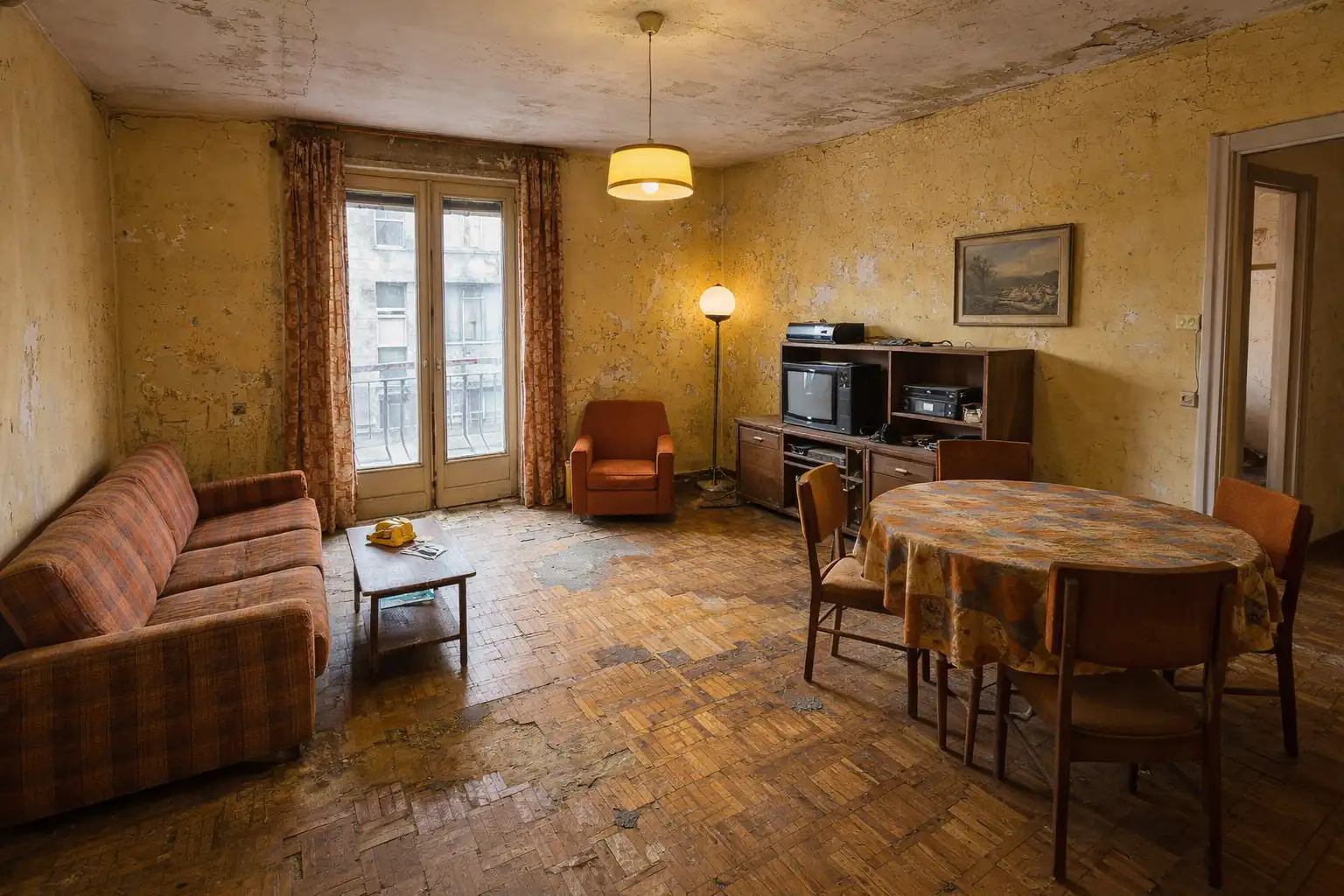
In architecture competitions the best project doesn't always win. The project that's communicated best wins. And today, in most cases, that means having architectural renders capable of telling an idea in a few seconds.
In our studio we collaborate regularly with architects who enter competitions, from national calls to international competitions. We see project boards every day, and the difference between those who pass the first round and those who don't often lies entirely in the quality of the visual communication. Not in the project itself.

The role of rendering in architecture competitions
Up until fifteen years ago, representation in competitions was dominated by plans, sections and the odd hand-drawn perspective. Today the situation has completely flipped: architectural rendering is the first element the jury looks at, often even before reading the design report.
The reason is practical. In a competition with 80-120 proposals, the panel has a few minutes for each board in the pre-selection phase. An effective render immediately communicates the character of the project, the relationship with the context, the atmosphere of the spaces. A plan, however well drawn, requires an interpretive effort that nobody has time for at that stage.
This doesn't mean rendering replaces the project: it means it introduces it. If the render doesn't work, many juries don't even get to read the rest of the proposal.
In our work with design studios, we've noticed a recurring fact: studios that invest in architectural rendering for competitions have a decidedly higher rate of access to the later stages. Not because the render "embellishes" the project, but because it makes it understandable at a glance.
What juries look for: visual evaluation criteria
To create effective architectural renders for a competition, you need to understand what those judging are looking for. Having worked with studios that have won national and international competitions, we've identified four criteria that juries evaluate, often unconsciously, in the first seconds of observation.
Clarity of the concept
The jury must immediately grasp what the project's strong idea is. The rendering has to communicate a thesis, not simply show a building. If the concept is the permeability between inside and outside, the render must make that transition evident. If it's the relationship with the topography, the choice of framing must emphasize that dialogue.
A mistake we often see: technically perfect renders that communicate nothing. Beautiful, but mute.
Atmosphere and identity
Every project has a character. A cultural center doesn't have the same light as a residential complex, a library doesn't have the same atmosphere as a covered market. The rendering must capture that identity through light, materials, human presence, vegetation.
In our experience, the renders that win aren't the ones with more polygons or more realistic materials. They're the ones where you step into the image and "feel" the space.
Integration with the context
No building exists in a vacuum. Juries assess how much the project dialogues with what surrounds it: the urban fabric, the landscape, the adjacent buildings. A render that shows only the architectural object isolated from its context loses a fundamental dimension.
That's why we always ask our clients for photos of the site, maps, information about the built and natural context. Placing the project in its real environment isn't an aesthetic detail: it's a design act.
Technical accuracy
Credible proportions, materials consistent with the project specifications, physically correct lighting. The jury includes architects and engineers who immediately recognize a render with wrong proportions or inconsistent materials. Absolute photorealism isn't required, but consistency and precision are.
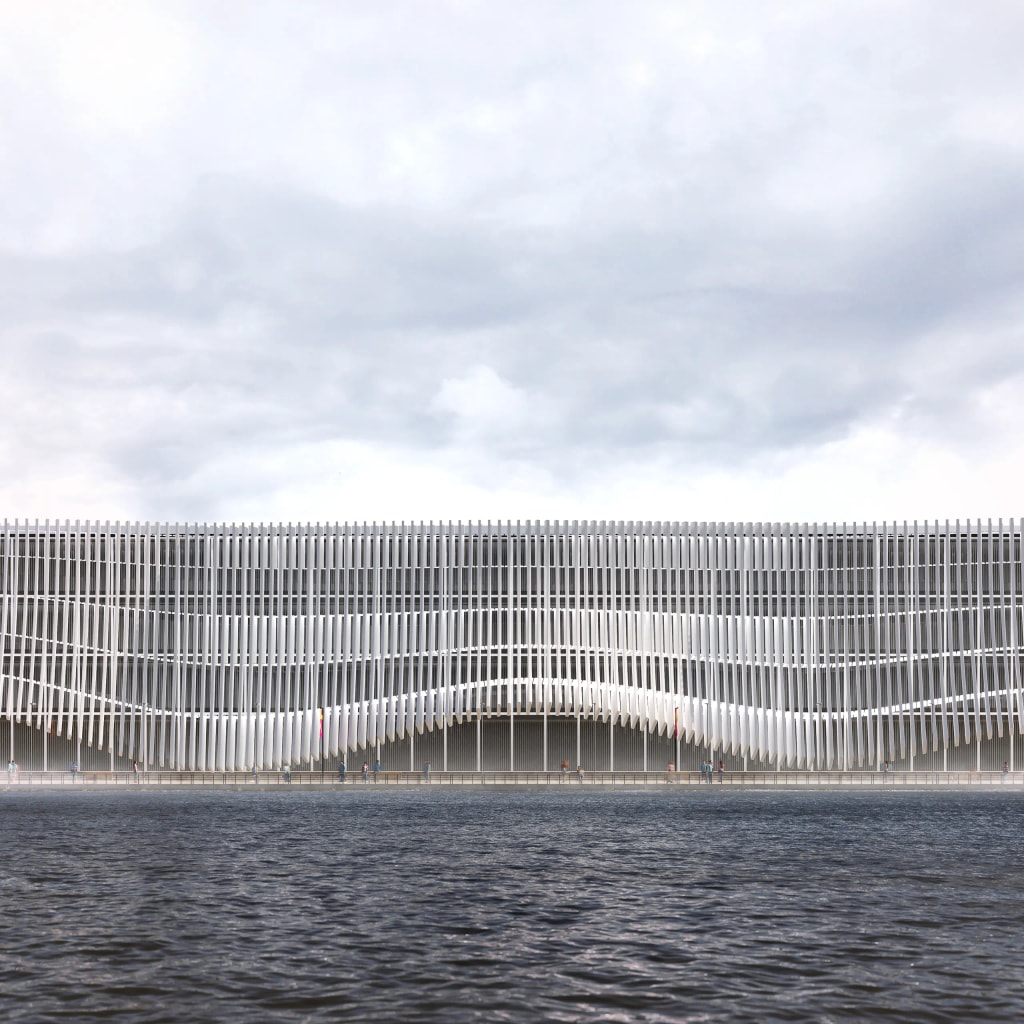
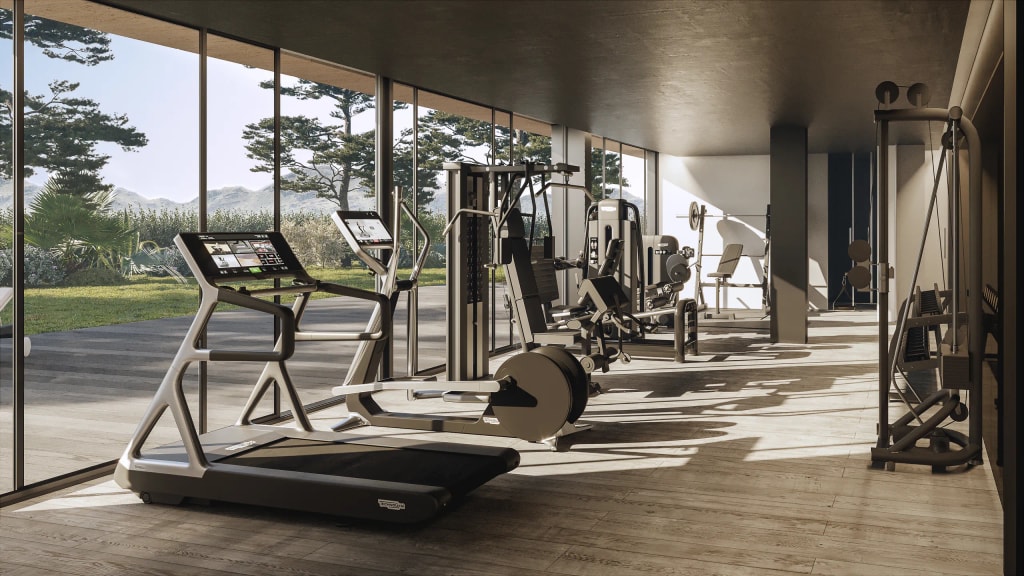
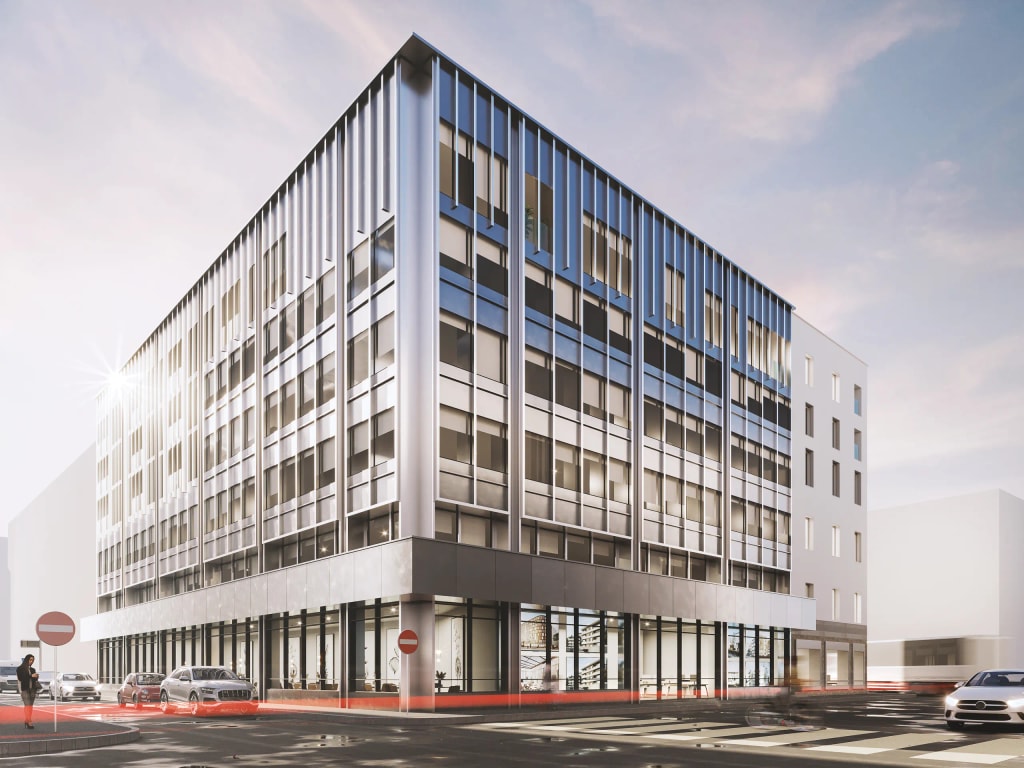
Types of rendering for competitions
Not all renders serve the same purpose within a competition board. Each type answers a specific communication need.
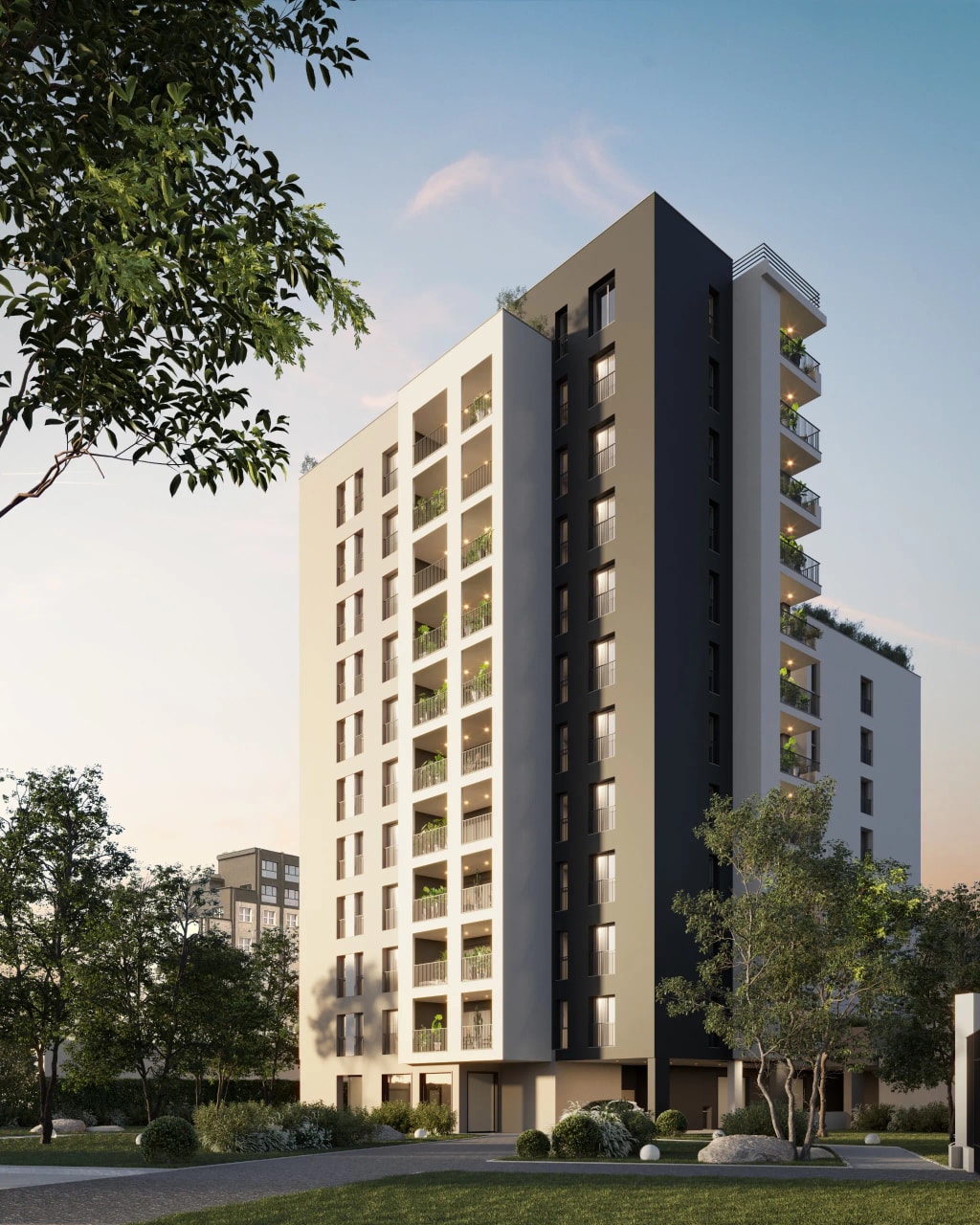
Contextualized exterior views
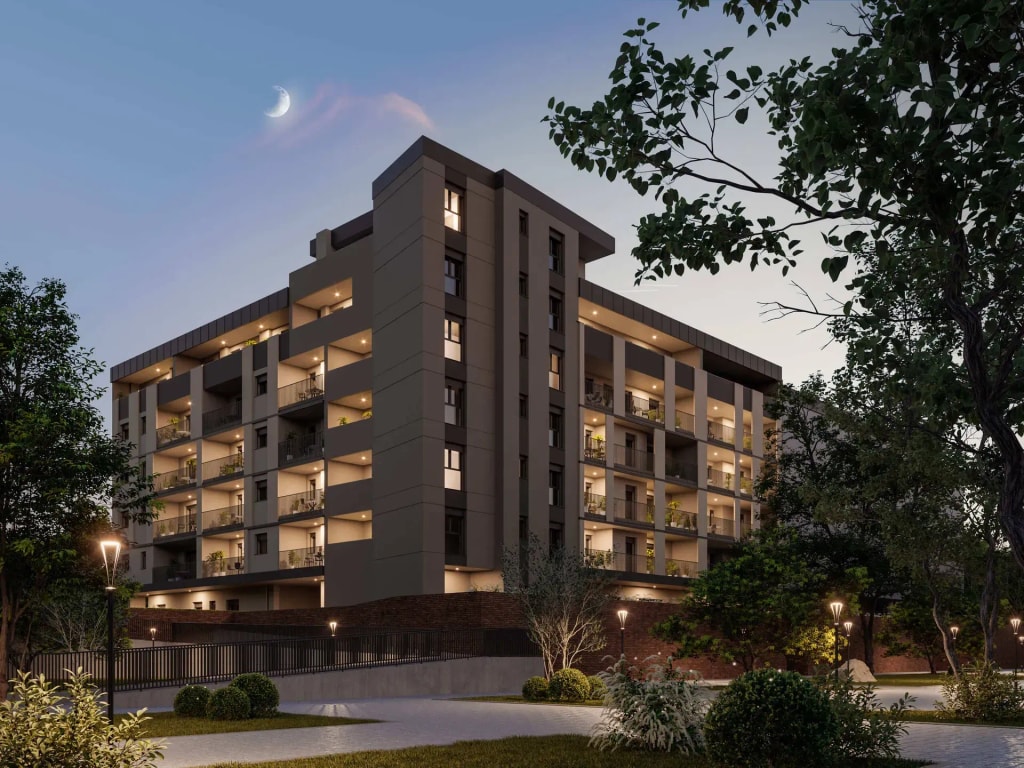
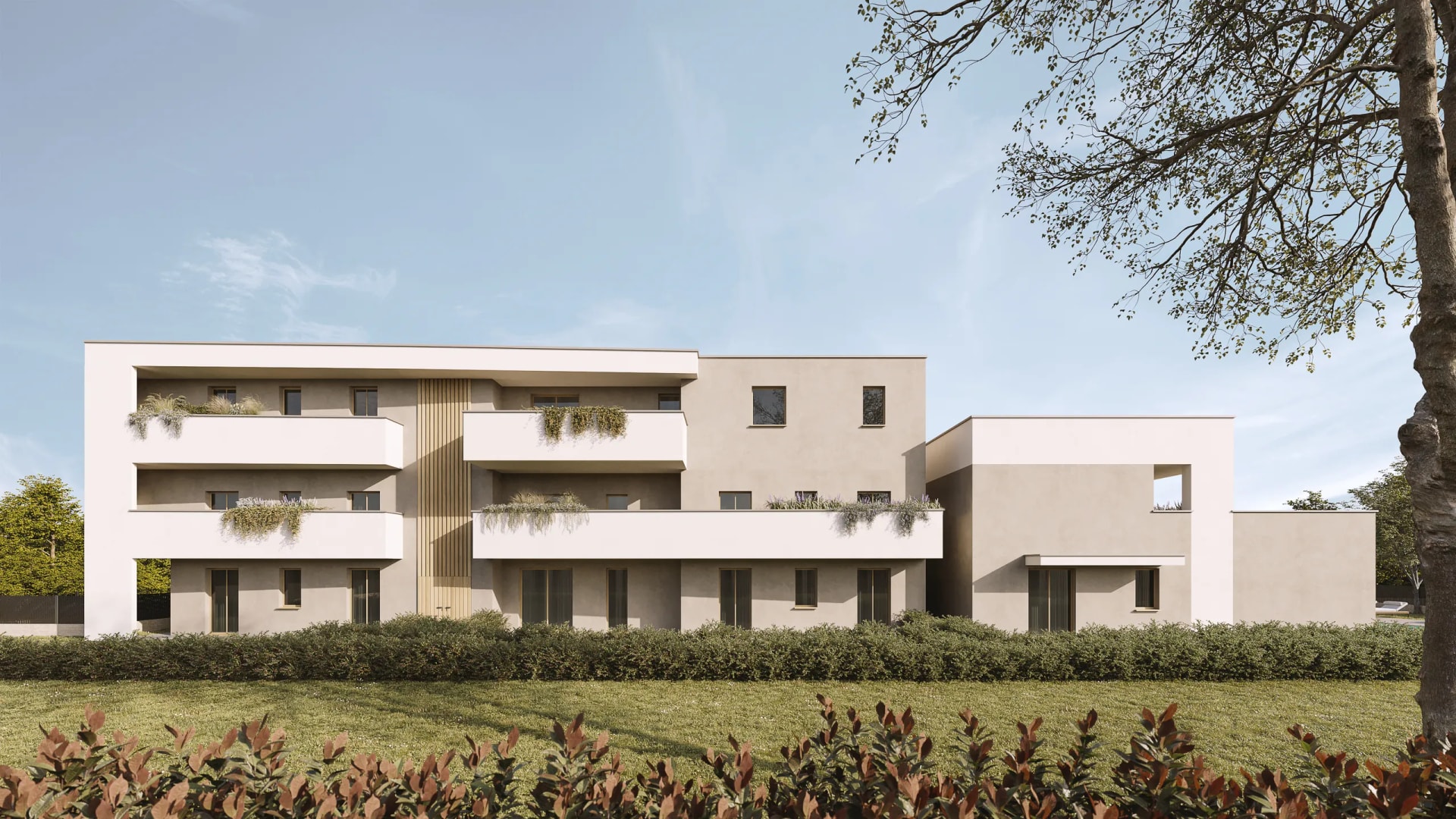
This is the "hero" view, the one seen first and the one that determines the first impression. It must show the building in its context, with a framing that brings out its volume, its placement in the landscape and the relationship with the surrounding public space.
In competitions we often work with eye-level views, which convey the real perception of someone walking toward the building. Low-angle views work to emphasize monumentality, slightly raised ones to show the relationship with the urban context. You can see the framings and angles on our page about exterior rendering.
Atmospheric interiors
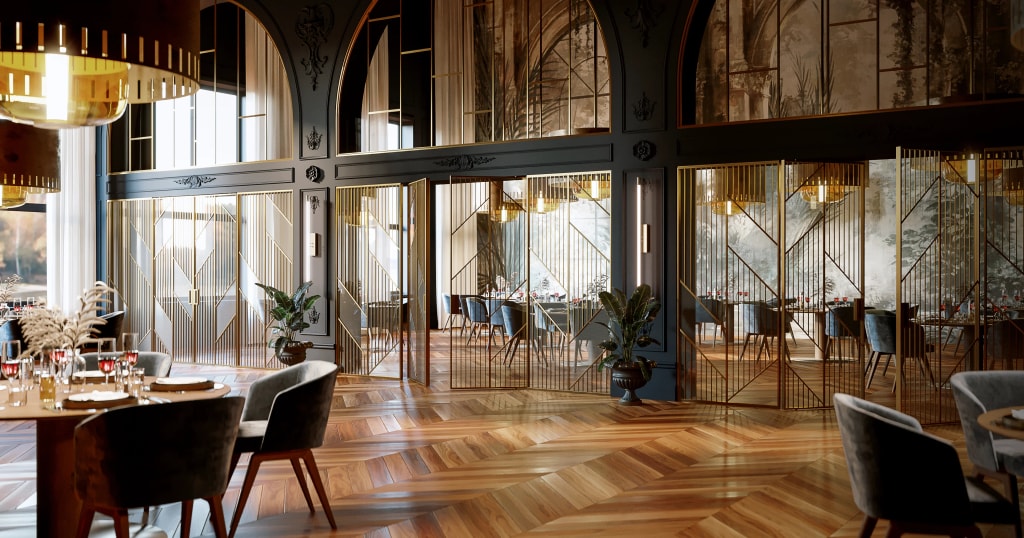
Interiors in competitions play a different role compared to interior rendering for the real estate sector. Here you don't have to show specific furnishing or sell a lifestyle. You have to communicate the quality of the space: the light, the scale, the materiality, the relationship between solid and void.
For this reason, interior renders for competitions tend to be less "furnished" and more atmospheric. Few people in the scene, essential materials, a lot of attention to natural light and composition.
Masterplans and aerial views
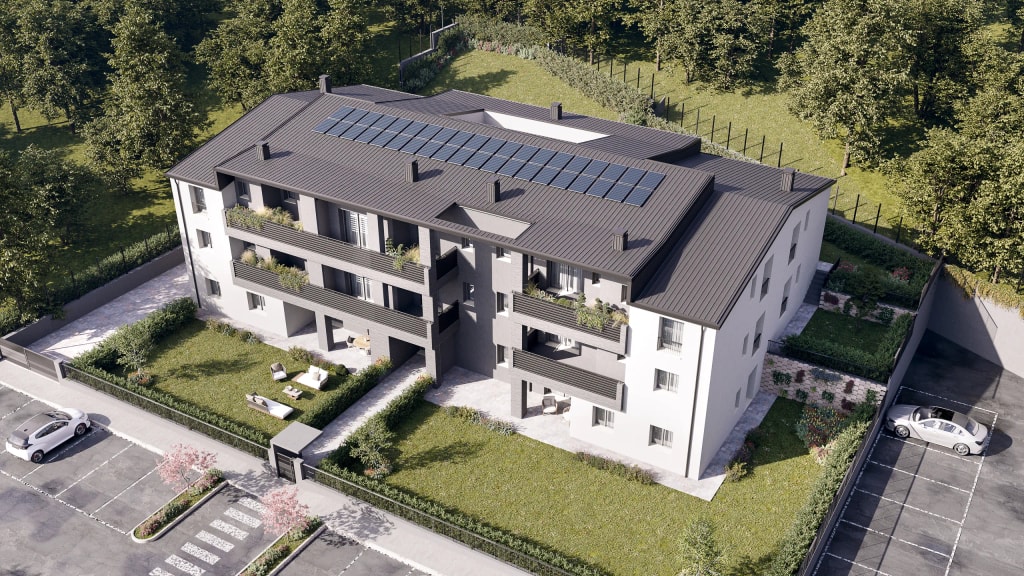
For projects at an urban or landscape scale, the aerial view is essential. It shows the general layout, the connections, the flows, the relationship between solids and voids at a territorial scale.
The aerial view requires a delicate balance: it must be detailed enough to communicate the architectural quality, but synthetic enough to be readable at a glance. Too much detail and it becomes confusing. Too little and it looks like a schoolroom model.
Diagrams and 3D schemes
These aren't renderings in the classic sense, but they've become an integral part of competition communication. Exploded axonometric diagrams, three-dimensional functional schemes, sequences of layers that show the constructive or distributive logic.
These elements work as a bridge between the emotional image of the rendering and the design logic of plans and sections. They help the jury understand the "why" behind the "how."
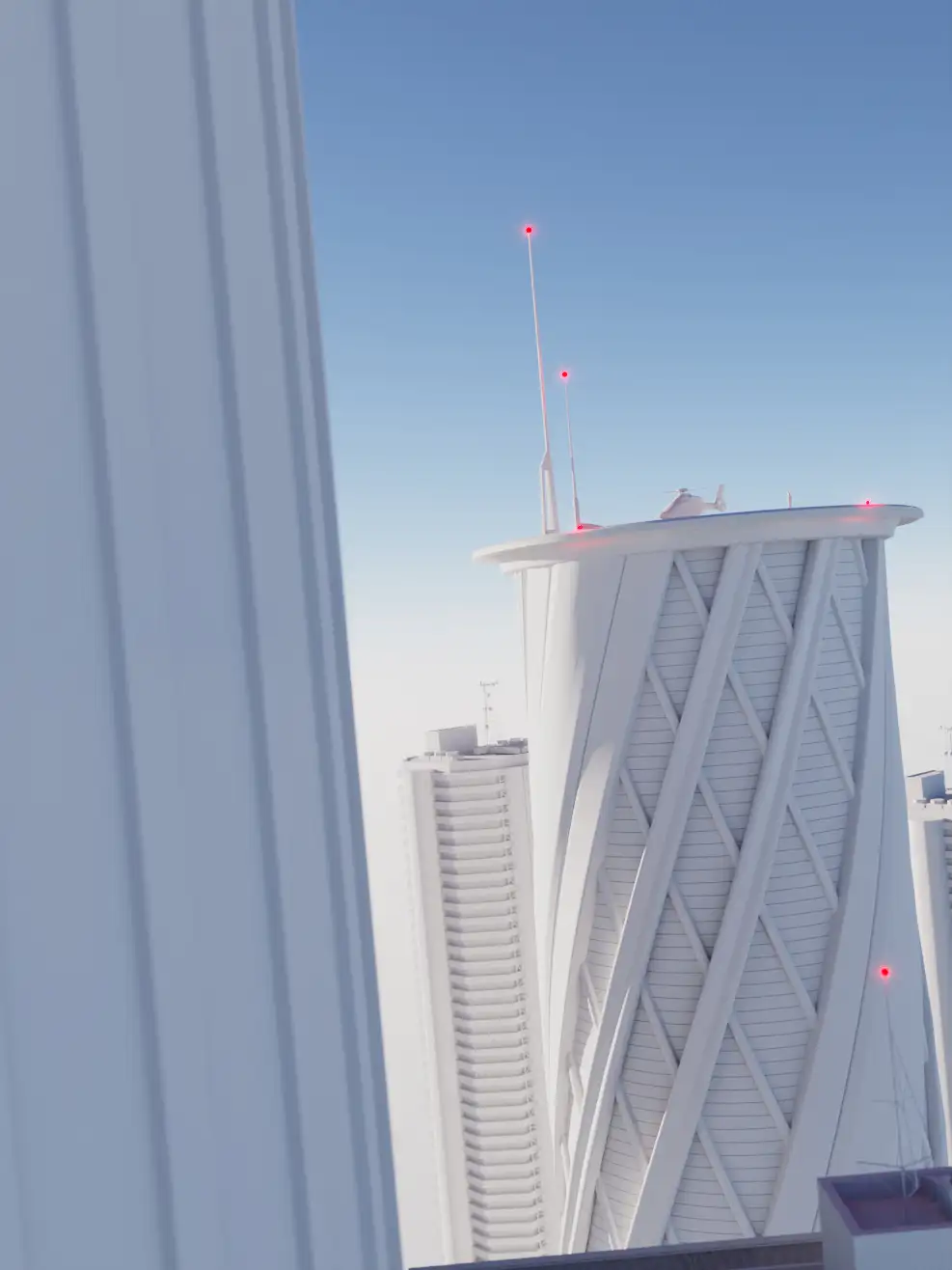
How to communicate a design idea with rendering
Rendering for a competition is visual storytelling, not technical documentation. Every image has to tell something about the project that words alone couldn't convey.
Choose a narrative point of view
Before deciding the framings, ask yourself a simple question: what is the story this project tells? A community center tells inclusion and openness. A museum tells contemplation and discovery. A student residence tells sociability and intimacy.
This story has to guide every choice: the time of day, the season, the people in the scene, the composition. A rendering of the community center at sunset with families in the park tells a different story from the same building at dawn, empty and silent.
Less is more (in most cases)
One of the most common mistakes in competitions is producing too many renders. Five mediocre views communicate less than two excellent ones. Every image must have a precise role in the narrative: if it doesn't add information, it takes away attention.
In our experience, the effective composition for a typical competition is:
- 1 "hero" exterior view (the calling card)
- 1-2 interior views (the key spaces)
- 1 aerial or axonometric view (if relevant to the scale)
- 1-2 3D diagrams (the design logic)
The role of light and atmosphere
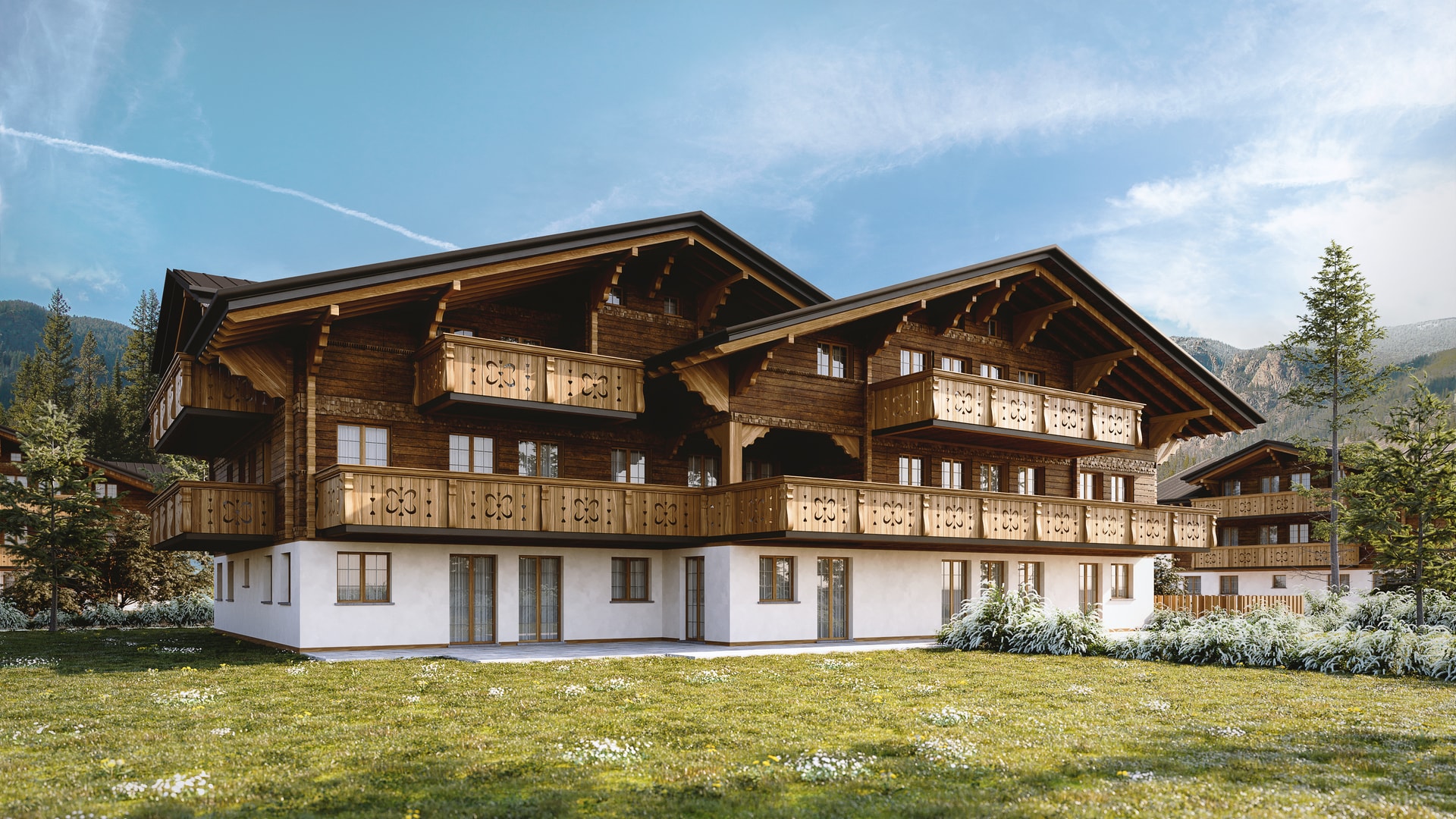
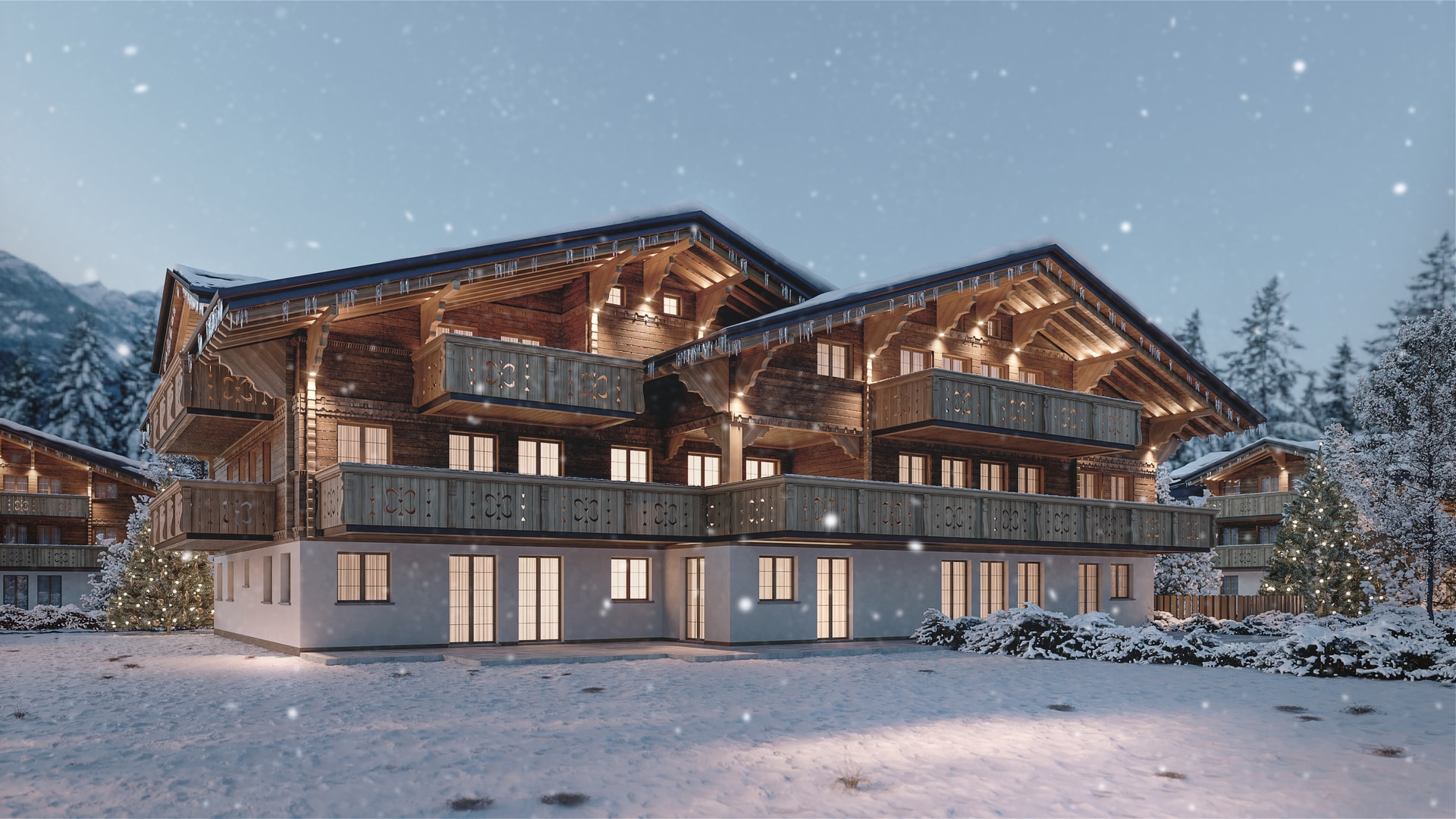
Light in a competition render isn't just technical: it's rhetorical. The golden hour communicates warmth and welcome. Zenithal light communicates rigor and monumentality. The diffuse light of a cloudy day communicates sobriety and integration with the northern European landscape.
At Archivision we dedicate a lot of time to discussing lighting with our architect clients, because we know that that time of day, that angle of light, can radically change the message of the project.
Timing and deadline management
Competition deadlines don't move. This is the starting point, and it conditions the whole process.
Realistic timelines
A complex render for a competition takes, from receipt of the 3D model to final delivery, from 5 to 10 business days. This includes detailed modeling, lighting study, the actual rendering and post-production.
For a complete set of 3-5 views, the time rises to 10-15 business days. If you add animations or walkthroughs, we're talking about 3-4 weeks.
The problem is that many studios contact us 7 days before the deadline asking for 4 renders. It can be done, but the margin for revisions shrinks and the result might not reach the optimal level.
How to manage timing
Our advice, based on hundreds of collaborations, is to plan the rendering in parallel with the development of the project, not after. Here's a timeline that works:
- Week 1-2 of the competition: Design development + rendering briefing (framings, atmosphere, references)
- Week 3: First render draft (the project doesn't have to be finished, the general volume is enough)
- Week 4-5: Final design + renders updated with final details
- Last week: Post-production, revisions, board composition
Working this way lets you iterate on the project also based on how it "comes out" in the render, which often leads to significant design improvements.
Entering a competition with tight deadlines? We regularly collaborate with architecture studios in managing tight timeframes. Contact us to define a realistic work plan together.
Common mistakes in competition renderings
After years of collaboration with studios that enter competitions, we've seen the same mistakes recur with frequency. Here are six you can avoid.
1. Over-rendering: too much realism, too little idea
A hyper-photorealistic render with every blade of grass modeled and every reflection calculated can be counterproductive. The jury isn't looking for a photograph: it's looking for a project. If the realism distracts from the architectural idea, you're communicating your technical skill, not your project.
Many winning competitions use renders with a recognizable graphic style, not necessarily photorealistic. What matters is that it be intentional and consistent.
2. Ignoring the context
Renders with the building on a white background or with a generic, approximate context. The jury wants to see how the project dialogues with the real place: streets, adjacent buildings, topography, existing vegetation. Cutting out the context means cutting out half the project.
3. Wrong atmosphere
A kindergarten rendered with the gloomy atmosphere of a film noir. A monumental cemetery lit like a shopping mall. It seems obvious, but it happens more often than you'd think. The atmosphere must be consistent with the function and the character of the building.
4. Too many views, all the same
Five exterior renders from slightly different angles don't communicate five different things. They communicate one thing only, badly repeated. Every view must have a specific narrative goal: if you can't explain in one sentence what that view adds, it probably isn't needed.
5. Weak composition
The most beautiful render loses value if it's poorly placed on the board, with inadequate resolution or squeezed between diagrams and text. The composition of the board is part of the communication project. Give the render the space it deserves.
6. Inconsistent human figures
People cut out badly, with shadows in different directions, dressed for different seasons in the same scene, or with wrong proportions relative to the building. Human figures give scale and life to the space, but if they're inserted carelessly they become a disruptive element that undermines the credibility of the entire image.
Budget: how much to invest in rendering for a competition
The question about budget is legitimate and should be addressed with real numbers, not with vague formulas.
Rendering as a percentage of the competition budget
Based on our experience, rendering is generally 15-25% of the total budget a studio invests in a competition (counting team time, board printing, physical model if planned, miscellaneous expenses).
This percentage varies according to the scale of the competition:
- Local / ideas competitions (limited studio budget): 1-2 essential renders, contained investment. The goal is to communicate the idea effectively, not to produce magazine images.
- National competitions (medium budget): 3-4 renders + 3D diagrams. Here visual quality becomes a real competitive factor and the investment is justified.
- International competitions / major tenders: 4-6 high-quality renders, possibly a video walkthrough. The level of the competition is high and rendering becomes a strategic investment.
How much it concretely costs
Costs vary greatly according to the complexity of the project, the number of views and the level of detail required. To get a personalized estimate based on your specific competition, you can use our tool to calculate the quote or write to us directly with the call and the project materials.
The key point is this: investing a few thousand euros in visual communication, on a first prize of €50,000 or the design commission, has a very favorable risk/return ratio.
Optimizing the budget
If the budget is limited, concentrate the resources on a single high-impact exterior render rather than spreading the budget across many mediocre views. One strong image is worth more than five weak ones.
Another practical tip: provide the rendering studio with a well-defined 3D model. The more modeling work the studio has to do, the more the cost rises. If your team already works in Revit, ArchiCAD or Rhino, exporting a clean model reduces times (and costs) significantly.
Frequently asked questions
How long before the deadline should I contact the rendering studio?
Ideally 3-4 weeks before. This allows us to work in parallel with the development of the project, to have time for revisions and not to arrive at the last moment with compromises on quality. At Archivision we also accept projects with tighter timeframes, but the best result is achieved with adequate planning.
Do I have to provide the 3D model or do you create it?
Both options work. If you already have a model in Revit, ArchiCAD, SketchUp or Rhino, we can start from that, reducing times and costs. If you only have 2D plans and sections, we model the project in 3D ourselves. In this case, times and costs increase proportionally to the complexity.
Is photorealistic rendering always the right choice for a competition?
No. It depends on the type of competition, the scale of the project and the message you want to communicate. For ideas competitions at an urban scale, a more diagrammatic or illustrative style can be more effective than pushed photorealism. For executive design competitions, photorealism demonstrates the maturity of the proposal. We always discuss it with the client before starting.
Can I also use the competition renders for other purposes?
Yes. The renders remain the property of the client and can be used for the portfolio, for the studio's website, for publications or for subsequent presentations. If the project is built, those renders also become useful material for communication during the construction phase.
In summary
- Architectural rendering is the first element juries evaluate: it must communicate the design idea in a few seconds
- Concentrate on a few high-impact views rather than many mediocre ones: one hero view, 1-2 interiors and a 3D diagram cover most needs
- Plan the rendering in parallel with the development of the project, not in the last 48 hours: at least 2-3 weeks are needed for a quality result
- Invest in rendering in proportion to the importance of the competition, typically 15-25% of the overall budget
Are you preparing a competition and want to understand how to structure the visual part? Tell us about the project: we'll analyze the call, define the views and the timing together. Write to us: we reply within 24 business hours.