An empty apartment is hard to sell: it lacks context. A buyer walks in, sees white walls and a bare floor, and can't picture how they might live there. Traditional home staging solves the problem by bringing real furniture into the property, but with costs that can exceed €5,000-10,000 and setup times that block viewings for days.
Virtual home staging does the same thing, without moving a single sofa. And in this guide we explain exactly how it works, how much it costs, and when it makes sense compared to the physical alternative.
What virtual home staging is
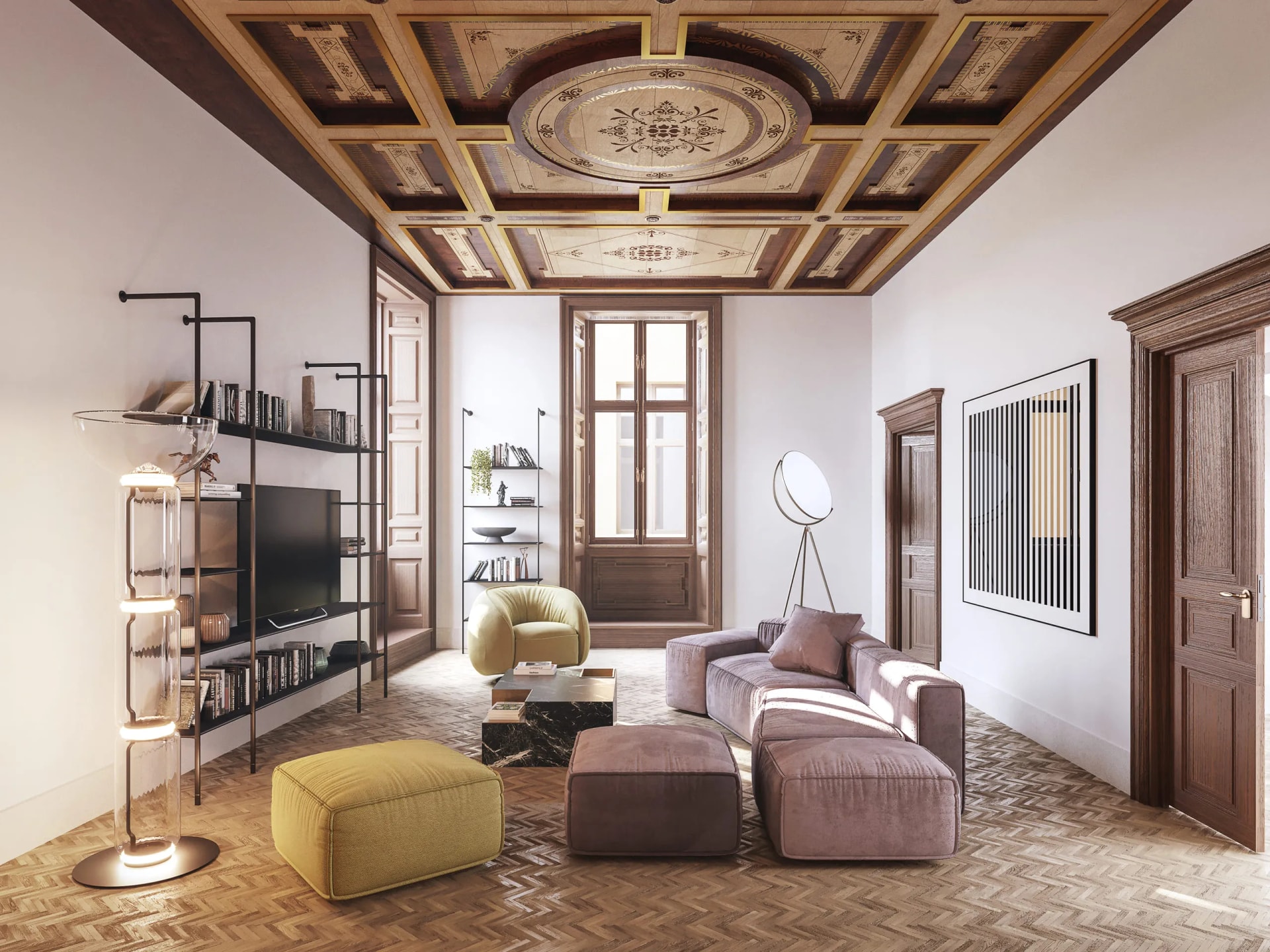
Virtual home staging is the process of digitally furnishing an empty or dated space. Starting from real photographs of the property or from floor plans, we create photorealistic renderings that show the space fully furnished and lit, with materials, colors and styles chosen to match the target buyer.
The result is an image indistinguishable from a professional photo of a genuinely furnished apartment. The buyer sees the living room with the sofa, the rug, the bookshelf, the afternoon light coming through the window. They see, in other words, a home they can imagine living in.
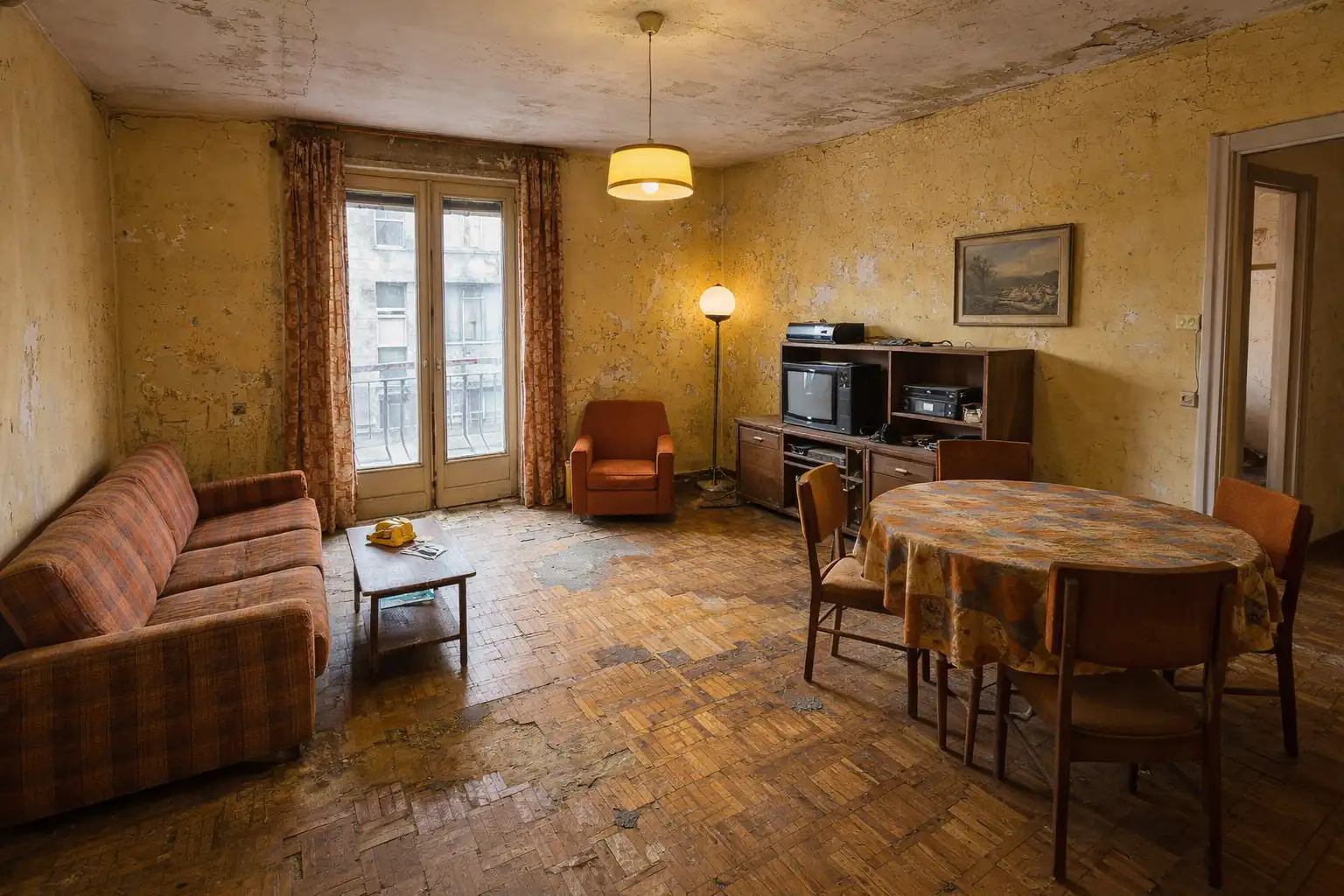
At Archivision we work regularly on virtual home staging projects for real estate agencies and developers. The most frequent request? Apartments in need of renovation with 1970s-80s interiors that, in their current state, struggle to attract interest on listing portals. With digital staging, that same three-room flat with terrazzo flooring and a green bathroom becomes a bright open space with an island kitchen and light parquet.
Difference between traditional and virtual home staging
The comparison between the two approaches is clear-cut. Here is how they stack up on the factors that matter most to anyone who needs to sell a property.
| Factor | Traditional Staging | Virtual Staging |
|---|---|---|
| Average cost | €3,000-15,000 | from €300 per room |
| Turnaround time | 1-3 weeks (logistics included) | 3-5 business days |
| Stylistic flexibility | Limited to available furniture | Any style, material, color |
| Reusability | None (must be set up and dismantled) | Total (reusable digital files) |
| Variants | Each variant = new setup | Variants at marginal cost |
| Empty/under-construction units | Requires an accessible property | A floor plan is enough |
| Environmental impact | Transport, materials, consumption | Zero physical logistics |
The key point isn't that one is better than the other in absolute terms. Physical staging makes sense for prestige properties where the buyer will visit in person and the budget allows it. Virtual staging is the more efficient choice for most situations: properties on paper, renovations, portfolios with many units to manage in parallel.
Benefits of virtual home staging
Beyond the obvious cost savings (we're talking about a 10:1 ratio compared to physical staging), there are operational advantages that often get underestimated.
Speed of execution
From the initial briefing to delivery of the images, it takes an average of 3-5 business days. No coordination with movers, no warehouse to manage, no risk of damage to furniture during transport. You send the photos or the floor plans, we discuss the style, and we get to work.
Unlimited variants at low cost
Want to see the same living room in a Scandinavian style and in an industrial style? With physical staging that means dismantling everything and starting over. With the virtual version, it's a variant that takes a fraction of the time and budget. This is especially useful when the property appeals to different target audiences and you don't yet know which style will work best.
No logistical constraints
Traditional staging requires the property to be accessible, clean, with working utilities. Virtual staging works even on units under construction, on buildings not yet built, on occupied apartments that can't be emptied. All it takes is a floor plan or a set of photos.
Material ready to publish
Virtual home staging renders arrive already optimized for use: high resolution for print, web formats for real estate portals, social media versions. You don't need an additional photographer, you don't need post-production. It's material ready to be published on listing portals, brochures, social media and presentations.
Visual consistency across the whole portfolio
For agencies managing dozens of properties, virtual staging guarantees a constant visual standard. Every listing features professional-quality images, regardless of the property's actual condition. This builds the agency's reputation over time.
How much virtual home staging costs
Costs vary depending on the complexity of the project, but here are the market ranges we can share from our direct experience.
Single-room staging (living room, bedroom, kitchen): from €300. The first image of the room covers the modeling, the furnishing, the materials and the lighting, and is paid once. Each additional view of the same room costs €150.
Apartment package (3-4 rooms): from €900 for three rooms, from €1,200 for four. Each room is its own scene and has to be modeled and furnished: living room, kitchen, master bedroom and bathroom. The coordinated furnished floor plan adds €200 per unit.
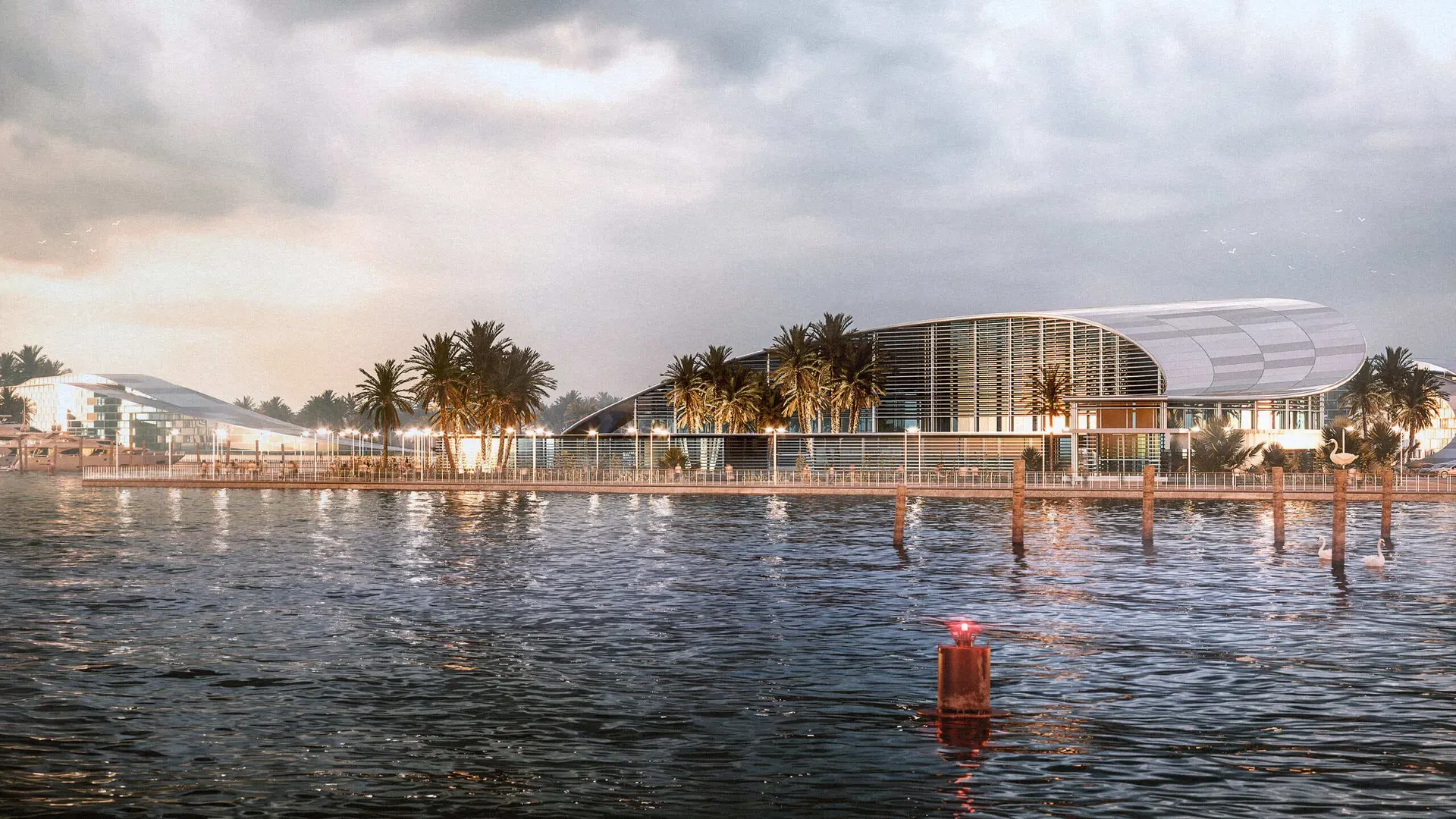
Complete project with exteriors: €1,500-3,000. For developers who need the full visual set: building exteriors, furnished interiors in different configurations, aerial views.
The comparison with physical staging is immediate: for the cost of a single traditional setup, you can do the virtual staging of 5-10 different apartments.
A calculation we often run with agencies: if a €300,000 property stays unsold for 3 months longer than necessary, the hidden cost (tied-up capital, condominium fees, financing charges) easily exceeds €5,000. Investing €750 in virtual staging to speed up the sale has an obvious return.
Want a specific quote for your project? Calculate your quote online in a few minutes.
How the process works
At Archivision we've streamlined the process as much as possible. Three steps, direct communication, no bureaucracy.
Step 1: Sending the material
You send us the photos of the property (or the floor plans if it's under construction), along with notes on the desired style and the target buyer. Even just visual references are enough: a Pinterest link, a photo of a furnishing setup you like, a description in words.
If you're not sure what you want, no problem. We propose the stylistic direction ourselves based on the property type, the area and the target market. A one-bedroom flat for young professionals in Milan gets a different styling than a family villa in Franciacorta.
Step 2: Production and review
We create the 3D model of the space (if we start from a floor plan) or work on the existing photos. We add furniture, materials, lighting. We send you a first version for feedback.
Average turnaround: 3-5 business days from receipt of the material. Revisions (changing a wall color, swapping out a piece of furniture, adjusting the light) are included and take an additional 1-2 days.
Step 3: Delivery and use
You receive high-resolution images, ready for any use: real estate portals, print, social media, presentations. Formats optimized for each channel, without having to go through a designer.
The entire process happens online. No site visit, no in-person meeting needed. We work regularly with agencies across the whole of Italy, from Lombardy to Sicily.
Who virtual home staging is ideal for
Virtual staging isn't for everyone and isn't needed for every property. A furnished studio apartment that sells with real photos doesn't need renderings. But there are three profiles for which it becomes a decisive tool.
Real estate agencies
The most frequent use case. Agencies manage portfolios of dozens or hundreds of properties and need quality visual material for each one. Virtual staging raises the quality of presentation across the whole portfolio at sustainable costs, without the logistics of physical staging.
An aspect that's often overlooked: virtual staging also improves the listing-acquisition phase. An agency that can show the owner "here's how we'll present your apartment" starts with a competitive edge over those who offer only standard photos.
If you work with an agency, we've written a dedicated guide to the benefits of rendering for real estate agencies that goes into more detail.
Developers and builders
For those selling off-plan, virtual staging isn't an option: it's the only way to show the interiors. Virtual home staging renders become the heart of the sales material: brochures, dedicated websites, presentations for investors, listings on portals.
In our studio we often work with developers who need to sell entire residential complexes before construction begins. In these cases, the typical package includes exterior renderings of the building, furnished interiors for each apartment type and furnished floor plans for the commercial material.
Private owners selling a home
If you're selling a property in need of renovation or an empty apartment, virtual staging is probably the investment with the best cost-to-result ratio you can make. For a few hundred euros, you turn an anonymous listing into a presentation that draws attention and generates targeted viewings.
Results: data on accelerated sales
The numbers emerging from industry research are consistent and significant.
According to data reported by Inside Group Technology, properties presented with professional 3D visualizations record sales times reduced by up to 40% compared to those offered with traditional documentation alone. It's not a surprising figure: a buyer who can concretely visualize the space makes faster decisions.
The figure on perceived value is equally relevant: properties presented with staging (physical or virtual) are perceived as having a 50% higher value. This doesn't mean the sale price automatically rises by 50%, but that the negotiation margin shrinks. The buyer perceives the value and pushes back less on price.
The National Association of Realtors (NAR) found that 81% of buyers find it easier to visualize a property as their future home when it's furnished, even virtually. The figure confirms a simple psychological principle: people don't buy walls, they buy a lifestyle. Virtual staging shows it to them.
A practical aspect we notice in our daily work: listings with virtual home staging renders receive more clicks on portals, generate more information requests and, particularly useful for agencies, produce more qualified viewings. Those who have already "seen" the furnished apartment arrive with expectations aligned to reality.
On the impact of rendering on real estate sales, we've done the math here: rendering for real estate agencies.
Virtual home staging with AI: possibilities and limits
The topic of artificial intelligence applied to home staging is hot, and it deserves an honest answer.
What AI does well today
Generative AI tools can virtually furnish a photo of an empty space in seconds. You upload the photo, choose a style, and get a furnished image. The result, at first glance, can look convincing.
For an exploratory phase, to quickly understand the potential of a space or for internal communication, these tools are useful and practical. We use some of them ourselves as a starting point for discussing options with clients.
Where AI falls short
The problem emerges when those images have to go into a real estate listing, a commercial brochure or a presentation for investors. The current limits of AI in virtual staging are concrete:
Geometric accuracy. AI tends to distort the proportions of spaces: a sofa too large for the room, a window that shifts position, a ceiling that looks higher or lower than the real one. For a real estate listing, these inaccuracies create wrong expectations and potential legal problems.
Material consistency. Specifying the natural oak parquet from the Marazzi catalog isn't possible with current AI tools. In a professional rendering, every material corresponds to a real product, orderable and verifiable.
Lighting control. Lighting in AI is approximate. In a professional rendering, we simulate the real light of that specific orientation, in that month, at that time of day. The difference shows and affects the credibility of the image.
Repeatability. Asking AI to redo the same image with a small change (changing the sofa color, adding a painting) often produces a completely different result. In traditional rendering, every change is surgical and controlled.
Our position
AI is a tool we integrate into our workflow, not a substitute. We use it to speed up the initial creative phase, to propose quick concepts, to explore stylistic directions. But the final result, the one that goes into the client's hands and onto the portals, always passes through a professional rendering process with control over every detail.
Frequently asked questions
Is virtual home staging legal for real estate listings?
Yes. What matters is that the images are clearly identified as renderings or "renovation project," not as real photos of the current state. This transparency is both an ethical obligation and a legal safeguard. At Archivision we always recommend specifying in the caption that it's a virtual furnishing proposal.
How long does it take to receive the images?
From 3 to 5 business days from receipt of the complete material (photos or floor plans + stylistic notes). For urgent projects, we offer reduced turnaround with a surcharge. Revisions take an additional 1-2 days.
Can I choose specific furniture and materials?
Yes. We can include furniture from specific brands (Poltrona Frau armchair, B&B Italia sofa, Boffi kitchen) and real materials from catalogs. This is particularly useful for developers selling with a defined specification: the buyer sees exactly the materials they will receive.
Is a site visit needed?
No. We work entirely remotely. For virtual home staging from photos, all it takes is images of the property shot with a smartphone (ideally with good natural light and without excessive wide-angle distortion). For staging from a floor plan, the DWG or PDF files of the dimensioned plans are enough.
Does virtual home staging also work for already-furnished properties?
In part. If the current furnishing is dated or doesn't enhance the space, we can create renders that show a renewed version of the room. In this case we work on the floor plans rather than the photos, to start from scratch without the constraints of the existing furniture.
In summary
- Virtual home staging costs up to 10 times less than physical staging, with a turnaround of 3-5 days
- Properties presented with virtual staging sell up to 40% faster and reduce the negotiation margin
- The process is simple: you send photos or floor plans, choose the style, receive images ready for any channel
- AI is a useful aid in the exploratory phase, but it doesn't yet replace the precision and control of a professional rendering
- It's the ideal tool for agencies with large portfolios, developers selling off-plan and private owners with properties to renovate
Do you have a property that's struggling to sell or a development to market? Send us the photos or the floor plans: we'll analyze the space together and propose the virtual staging solution best suited to it. Write to us, we always reply within 24 business hours.