"Can you send us the render?" or "When will the rendering be ready?" Every day we get emails, messages and calls where these two terms swap places with no apparent logic. And honestly, until a few years ago, we used them at random too.
This isn't just an academic question. Using the right term makes you sound more professional in front of clients and helps you communicate better with the people who produce the visualizations.
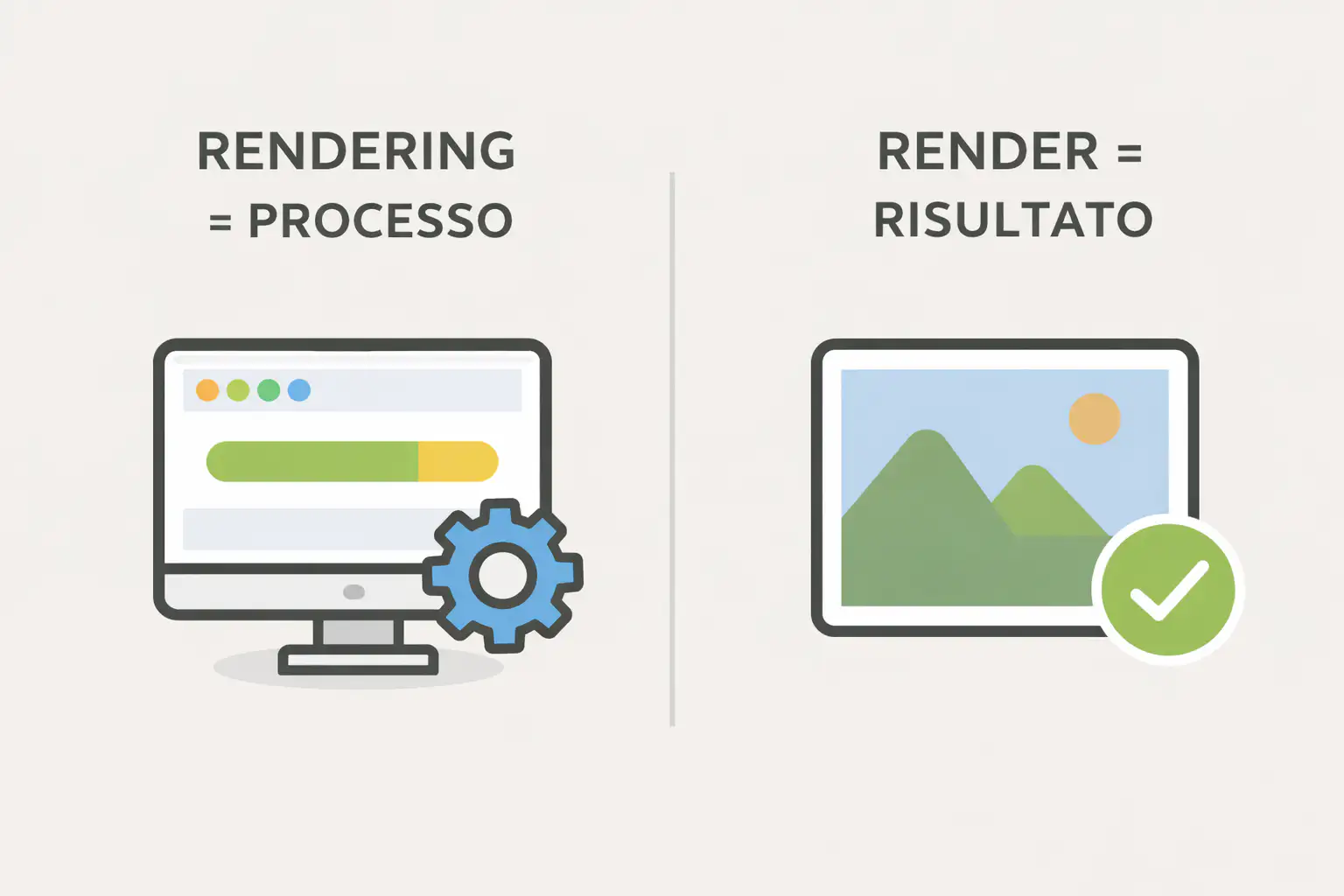
 Rendering is the process, the render is the result
What does "rendering" mean?
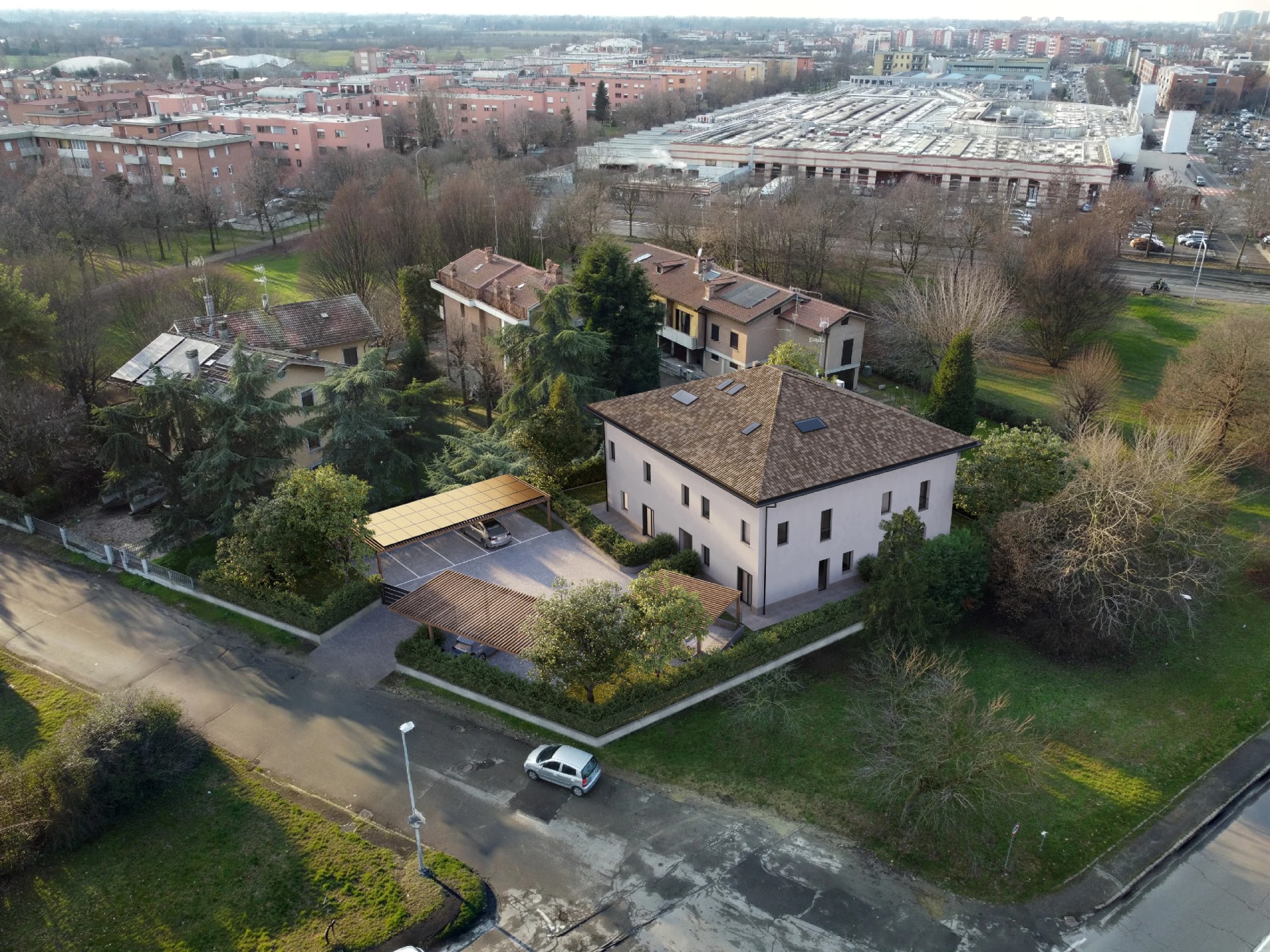
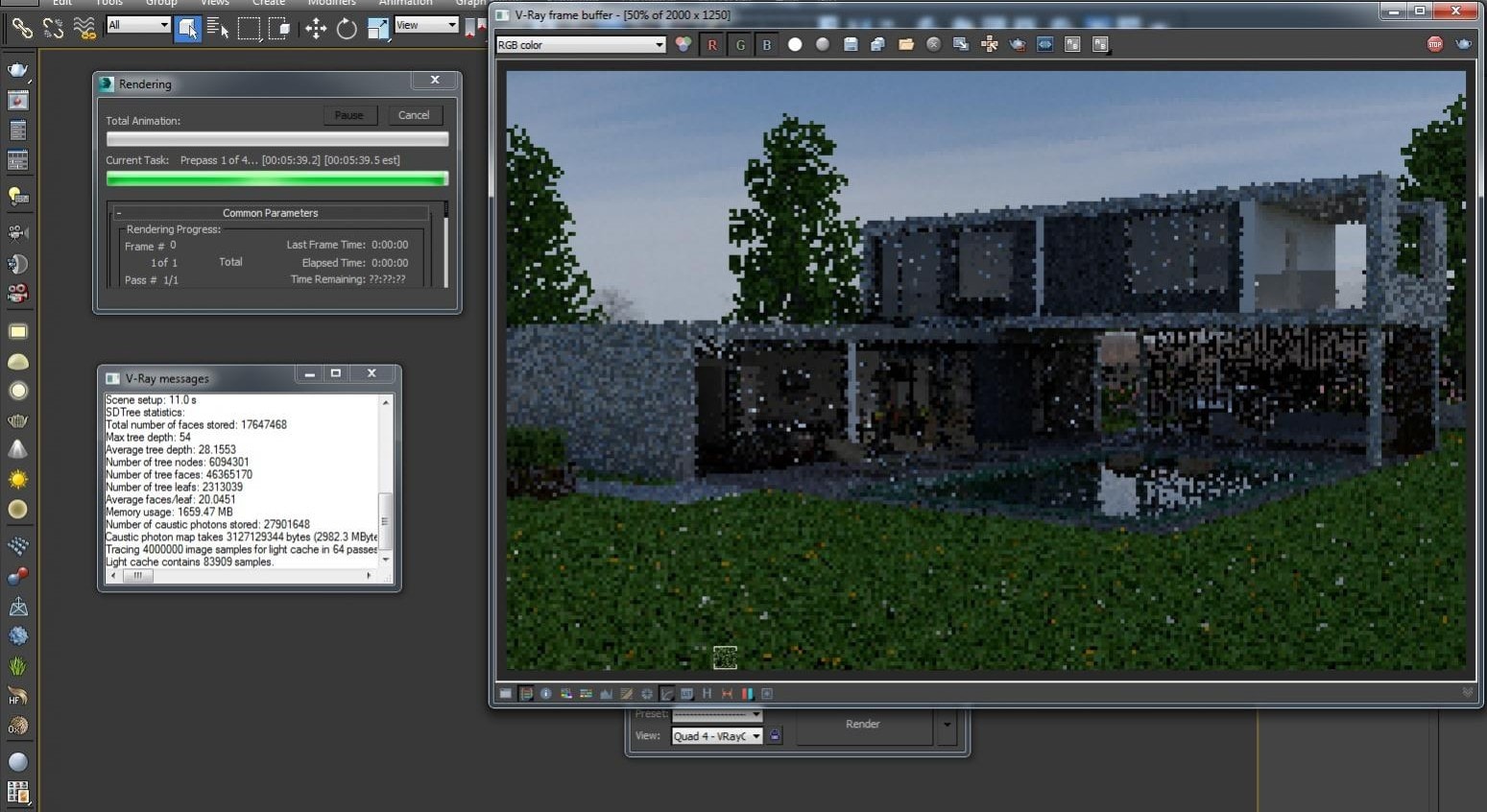
Rendering is the computing process that turns a three-dimensional scene (modeled in 3D software such as 3ds Max, Blender or Cinema 4D) into a two-dimensional photorealistic image. In technical terms, it's the computation that simulates how light interacts with materials, geometry and environment to produce the final visual result.
In everyday speech the word "rendering" carries two distinct meanings:
- Technical meaning: the process of computation - "rendering the scene will take 4 hours"
- Colloquial meaning: the final image produced - "I'll send you the renderings of the villa"
The term comes from the verb to render, which in this context means to "give back" or "translate" - to translate a 3D model into a usable image.
Rendering in other contexts
The term "rendering" isn't only about architecture. It's a cross-disciplinary concept:
- Architecture and design: photorealistic visualizations of buildings, interiors, products (it's what we do → explore the services)
- Film and VFX: computing the frames of animated films and special effects
- Video games: real-time rendering generates the image frame by frame as you play
- Web and UI: the rendering of a web page is the process of drawing it in the browser
When this guide talks about rendering, it means specifically the architectural and product kind: the one field where the distinction between "render" (result) and "rendering" (process) has practical consequences.
The technical difference
Let's start with the core of it. In the technical language of computer graphics:
Rendering (a verbal noun, from the verb "to render") refers to the process: the computation the computer runs to turn a 3D scene into a 2D image. It's an action that takes time, calculations, computing power.
Render (a noun) refers to the result: the final image you get once the rendering is complete. It's the JPG, PNG or EXR file you hand over to the client.
In practice:
- "The rendering will take 4 hours" ✓ (the process)
- "I'll send you the render tomorrow morning" ✓ (the final file)
In our studio we started making this distinction systematically in 2022, after a client asked us "how long does the render take?" and we realized they meant the process, but the sentence technically didn't add up.
How the terms are used in practice
This is where it gets messy, because in everyday professional use the line between the two words blurs. There's no official authority of 3D that decides which form is "correct".
In real-world professional practice:
Rendering (more common)
Most professionals use "rendering" for both the process and the result:
- "We're working on the renderings of the villa"
- "I'll send you the renderings in high resolution"
- "The night rendering is almost ready"
It's the most widespread use and it's perfectly acceptable. No one will look at you funny.
Render (more technical)
People who work with 3D every day tend to use "render" for the final result:
- "Give me a test render before you launch the final one"
- "This render has an exposure problem"
- "We produced 12 renders for the project"
It's the shop-floor term, and it's gaining ground, especially among younger professionals and in more structured studios.
The difference in brief
Rendering and render are not the same word
The process
Rendering
The computation the software runs to turn the 3D model into an image
The result
Render
The finished photorealistic image, ready to use and deliver
Why the distinction matters
It may sound like a purist's quibble, but being precise saves you concrete misunderstandings. Three examples from our email archive.
Example 1: Confusing quotes
Client email: "How much does a rendering cost?"
Ambiguous question. They might mean:
- How much to produce ONE final image? (a render)
- How much for the process across N images? (the rendering service)
We now always reply by asking: "How many views/final images do you need?" We use "view" or "image" to avoid confusion.
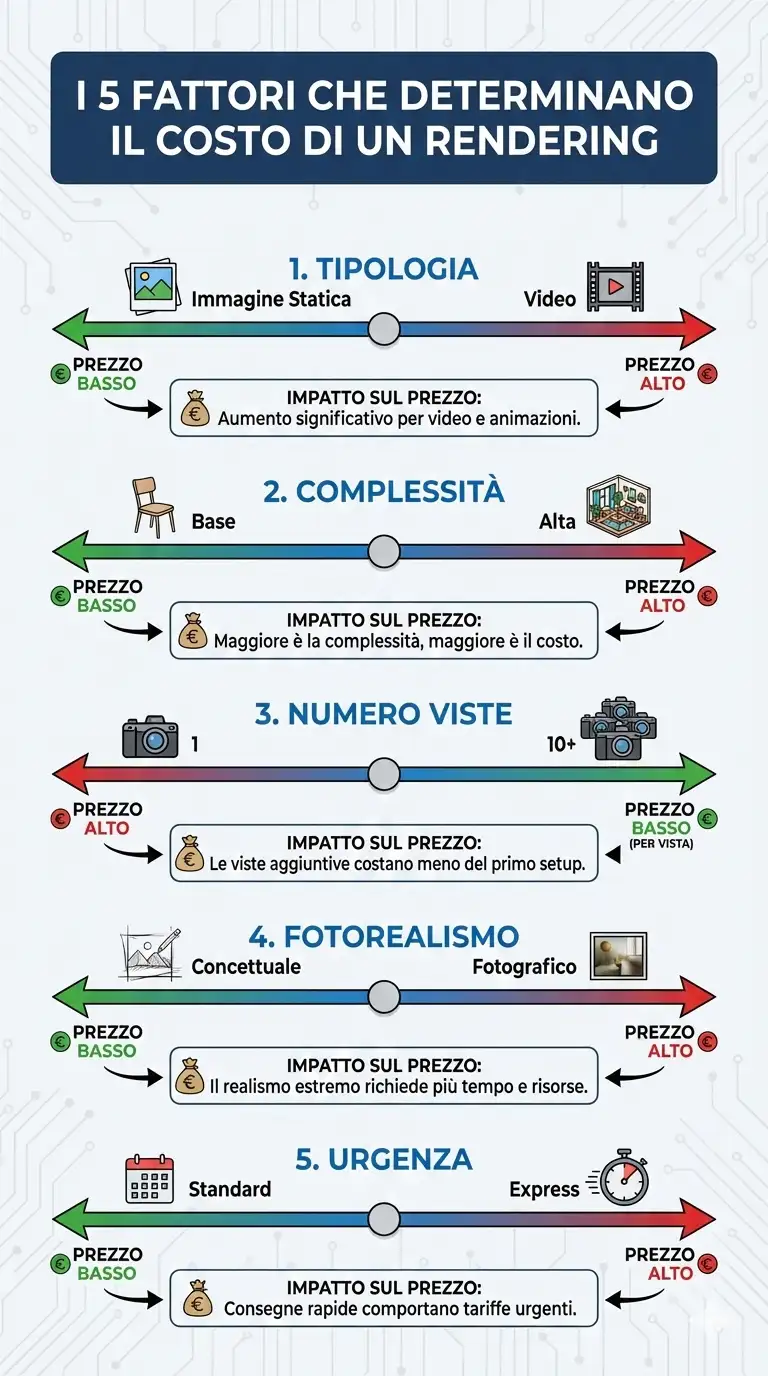
If you are the one about to ask for a quote, that same ambiguity costs you an extra round of emails. The reason work is counted in views is that most of the effort goes into building the 3D scene: modelling the space, setting the light, applying the materials. That part is paid for once. From there every additional camera angle reuses the same scene and costs about half, so an interior starts from €300 for the first view and from €150 for each one after that.
If you want the figure for your own project rather than a ballpark, the calculator works it out in a couple of minutes.
Example 2: Misread timing
Client email: "Is the rendering ready?"
If the client means "is the process finished?", the answer is yes after a few hours. If they mean "are the final images ready for delivery?", it might still take days for post-production and revisions.
Clear it up right away: "Yes, the computation is done. Now we move to post-production, delivery expected Thursday."
Example 3: Talking to suppliers
When we ask a render farm (an external computing service) "how long do you need?", we have to be precise:
- "How long is the rendering?" → they ask for the scene's technical specs
- "When do you deliver the renders?" → they ask for the deadline you want
Two different questions, two different answers.
Our position (at Archivision)
After years of internal debate, we settled on this line:
With clients: we use "rendering" for everything, because it's the most familiar and understandable term. We add "image" or "view" when clarity helps: "exterior rendering", "3 interior renderings", "photorealistic images".
Internally: we distinguish rendering (process) from render (result). In briefs we write "5 renders", in timelines we write "estimated rendering time".
In quotes: we avoid both and write "photorealistic view" or "3D image". Clearer for people outside the field.
Other terms to clarify (bonus)
While we're at it, let's clear up a few other word questions we get often:
Is "render" a verb too?
Yes. In English "render" works as both a noun and a verb: "we render the scene" (verb), "we deliver the renders" (noun). There's no need for an awkward coinage - render stands on its own, both as the action and as the result.
"Render artist" or "visualizer"?
Both are fine. "Render artist" is common in the industry, "visualizer" is broader. We use "visualizer" or "3D artist" because it's more accurate: we don't only render, we model, light and compose.
"Post-production" or "post-processing"?
Post-production, always. It's a term borrowed from film and photography that's already established. "Post-processing" sounds needlessly technical.
Practical tips to communicate better
If you're an architect, developer or agency commissioning renderings:
In emails to suppliers:
- Always specify: "I need 5 final images" (not "5 renderings")
- For timing: "When can I have the images?" (not "how long does it take?")
- Be visual: "view from the garden toward the pool" > "exterior render 3"
In briefs to end clients:
- Use "3D visualization" or "photorealistic image" to present the service
- Avoid overly technical terms that create distance
- "You'll receive 3 photorealistic views of the project" is clearer than "3 HD renderings"
In presentations:
- "Architectural rendering" works fine in the title/headline (it's the term people search for on Google)
- In the body, alternate: "images", "views", "visualizations"
- Never repeat "rendering" 15 times on one page
In summary
- Technically: rendering = process, render = final result
- In practice: both are acceptable, but "rendering" is more widespread and understandable
- What matters: clarity counts more than linguistic purity
- Tip: when in doubt, use "image", "view" or "visualization" → always clear
Next time you write to a rendering studio, don't get lost in terminology. Explain what you need (how many images, from which angles, with what level of detail) and let them translate it into the technical workflow.
Language evolves with technology. Render and rendering will coexist for years to come, purists notwithstanding.
If this is the first rendering you commission, the question that actually matters is not how to spell it. It is what to send in order to get a quote that holds: floor plans, elevations and sections in DWG or PDF are enough, plus some references for materials and context. From there we build the model and send you the first drafts to check, and where something is missing we propose.
Work out a ballpark for your project, or write to us and we will talk it through. We reply within 24 working hours, with no commitment.