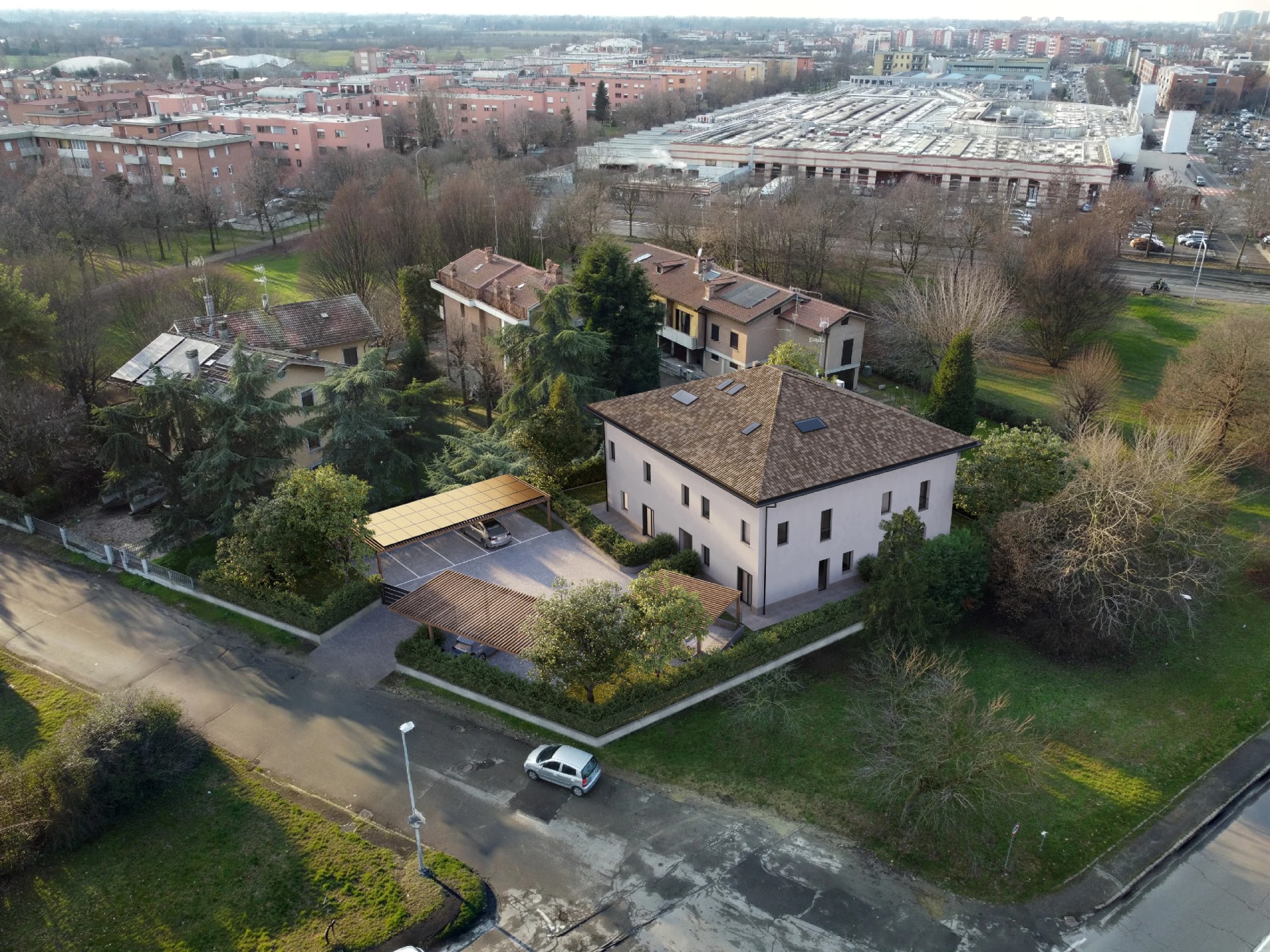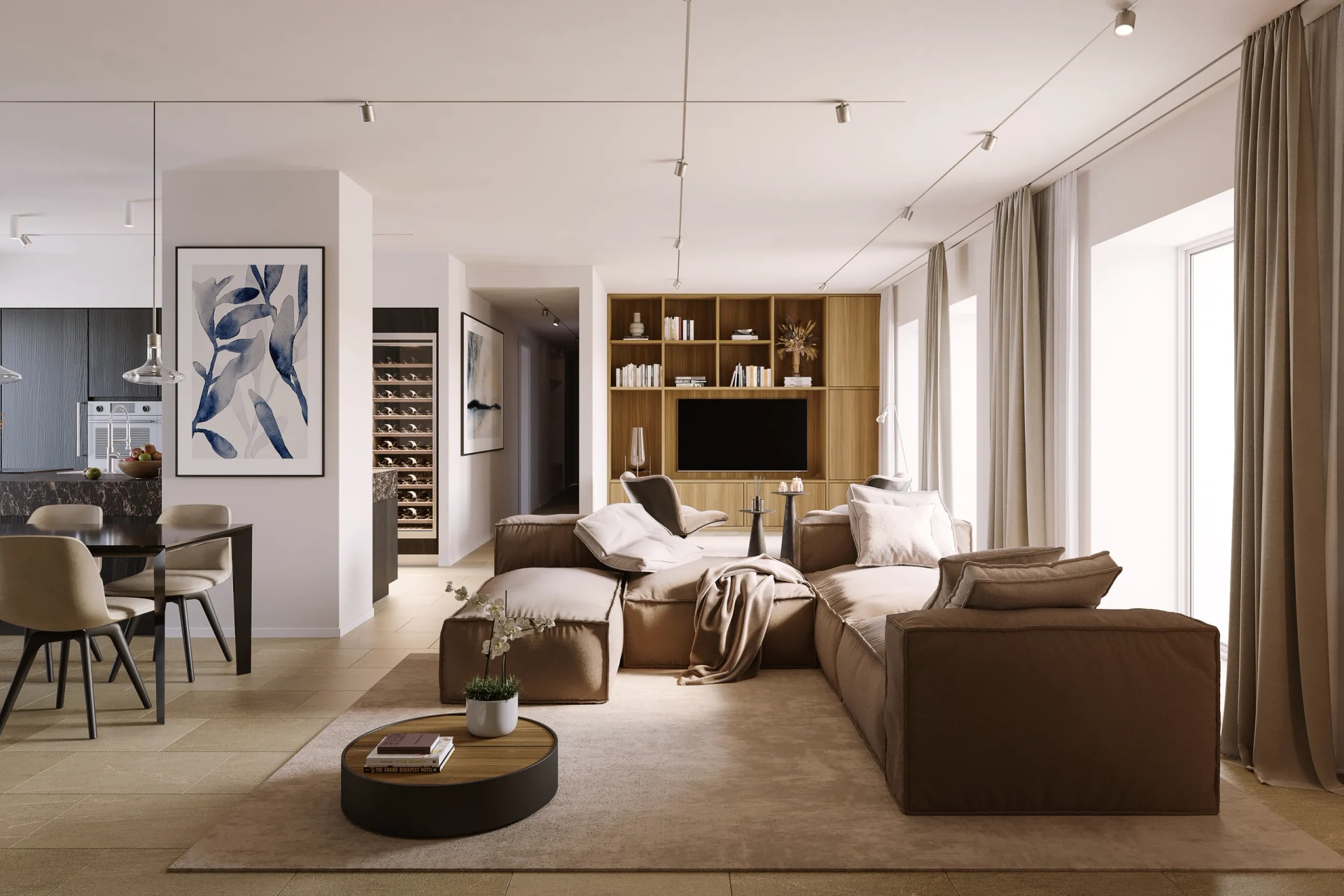
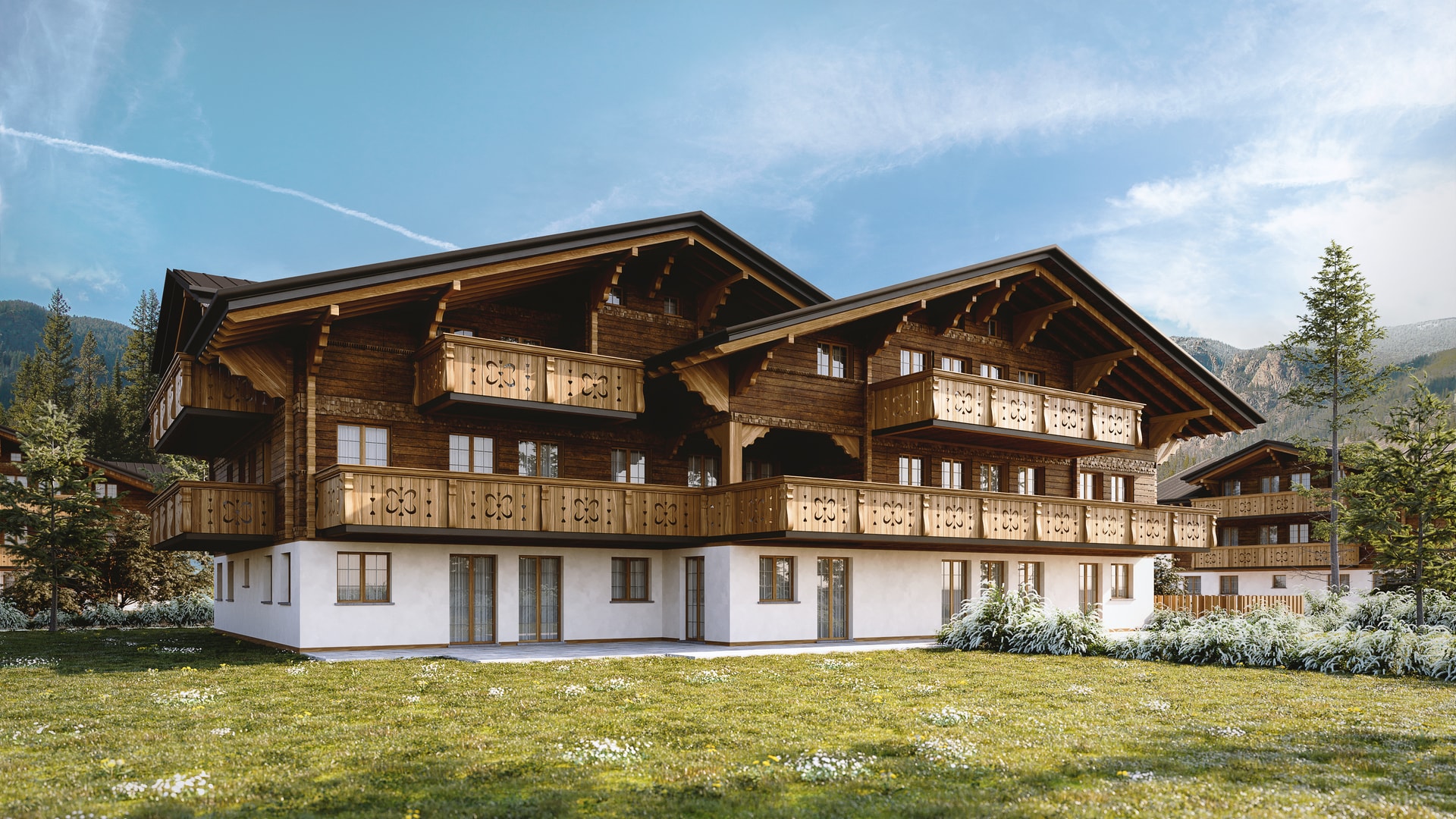
In 2026 the debate over AI rendering has entered its boring phase: the noise has died down, the tools have multiplied, the visual results have improved. One concrete question remains for anyone commissioning a rendering: where does AI genuinely help, and where can a professional studio not be replaced by a prompt?
This article answers on technical grounds, without taking sides. Our position is stated plainly: at Archivision we don't sell AI as a service. We use it where it improves the work on an individual project, never as a shortcut. The images you see in our portfolio are composed, lit and finished by people who know architecture, not generated by people who know prompts.

Same project: on the left an AI concept generated in 30 seconds, on the right the final 3D rendering after 3 days of work on the technical drawing.
What generative AI actually does
AI rendering uses generative artificial intelligence models to produce architectural images from a text prompt, a sketch or a reference image. Tools like Midjourney, Stable Diffusion, DALL-E and the ones built specifically for architecture (Veras, Maket, LookX) generate images in a few seconds that, on the surface, can look convincing.
The technical limit is structural: AI doesn't know your project. It generates plausible images based on the millions of examples it was trained on, not accurate images based on your technical drawing. The proportions can be wrong, the materials generic, the architectural details invented. For exploring an idea, it's perfectly fine. For selling a 400,000-euro apartment off-plan, it isn't.
What traditional 3D rendering does
Traditional rendering starts from building a precise 3D model of the building. Every wall, every window, every piece of furniture is modeled with real measurements taken from the floor plans. Physically accurate materials are applied, the lighting is set up by simulating the real position of the sun, and the software computes the final image through ray-tracing.
In our studio we work with 3ds Max and Corona Renderer. The full process, from model to delivery, typically takes 5-7 business days for a set of 2-3 views.
The fundamental difference: every pixel of the final image corresponds to something real in the project. If you see a natural oak floor from the Marazzi collection in the rendering, it's exactly that floor. If the afternoon light comes in through the south-west window, it's because we simulated the position of the sun at that hour, in that month, at that latitude.
Quick comparison
| Characteristic | AI Rendering | Traditional 3D Rendering |
|---|---|---|
| Speed per image | Seconds/minutes | Days |
| Cost per image | Low (€5-50) | Medium-high (€150-700+) |
| Dimensional accuracy | Approximate | Millimetric (from CAD) |
| Real materials | No (generic or invented) | Yes (catalog or specific sample) |
| Targeted edits | Difficult and unpredictable | Precise and repeatable |
| Consistency across views | Low (each rendering is its own) | Total (same 3D model) |
| Recommended use | Concept, moodboard, exploration | Sales, marketing, approvals |
| Not recommended for | Commercial brochure, approvals | Fast style iterations |
AI wins on speed and cost. 3D wins on accuracy and reliability. They aren't in direct competition: they answer different needs within a project.
Where generative AI holds up
In these three cases AI generation does a good job.
Exploring initial concepts. When the project is still fluid and you need visual ideas to steer the stylistic choices. In an hour AI produces 15-20 mood variants to discuss with the client, and then you invest in the final rendering only on the chosen direction.
Moodboards for the brief meeting. For the first conversations with the client, when you want to convey an atmosphere before the project is even defined. AI images communicate the idea, even if they aren't technically precise.
Inspirational social content. An Instagram post doesn't require the precision of a commercial brochure. AI lets you feed your editorial channels with striking visual content at a contained cost.
Where generative AI doesn't hold up
For these, traditional 3D rendering can't be replaced.
Real estate sales. When a buyer signs a preliminary contract based on the images, those images have to faithfully represent what will be built. A rendering with wrong proportions or invented furnishings creates false expectations and potential legal problems. The images in our exterior renderings and interior renderings respect the project's real measurements and materials.
Consistent marketing material. The brochure for a real estate project requires consistency across views: the same finishes, the same light, the same furnishings. With 3D rendering all the views come from the same model. With AI every image is a world of its own.
Planning approvals and landscape commissions. When a rendering is submitted to authorities to obtain permits, you need an accurate representation of the visual impact in the real context, not a generated guess.
Material and finish choices with the client. An interior designer who needs to get a material palette approved has to see exactly that marble, that wood, that fabric. Not a generic version.
Specification sheets with variants for developers. The same housing unit with three finish variants requires three renderings consistent with each other. With AI, consistency isn't guaranteed by definition: same prompt, different results.
You can see examples in our portfolio.
What we automate internally, and what we don't
AI as a workflow tool is one thing. AI as a sales label is another. On commercial touchpoints we don't claim "AI rendering" because the final deliverable to the client isn't generated by AI: it's composed, lit and finished by a human operator, on the 3D model built from the project's CAD.
Internally, some secondary operations can be sped up by AI tools:
- Generating vegetation and populating scenes with background elements (trees, people in the distance, cars)
- Denoising images during computation (cuts rendering time by 20-30%)
- Smart upscaling for very high-resolution deliveries
These are workflow operations, not positioning. They don't change the fact that the final rendering we deliver to you comes from the project's technical drawing, not from a prompt.
Frequently asked questions
Can I use AI images to sell apartments?
Technically yes, but with risks. AI images don't respect real measurements and may show proportions or materials that diverge from the project. For real estate sales we recommend 3D renderings based on the construction project. It's a matter of fairness toward the buyer and protection for the seller.
How much does AI rendering cost compared to traditional?
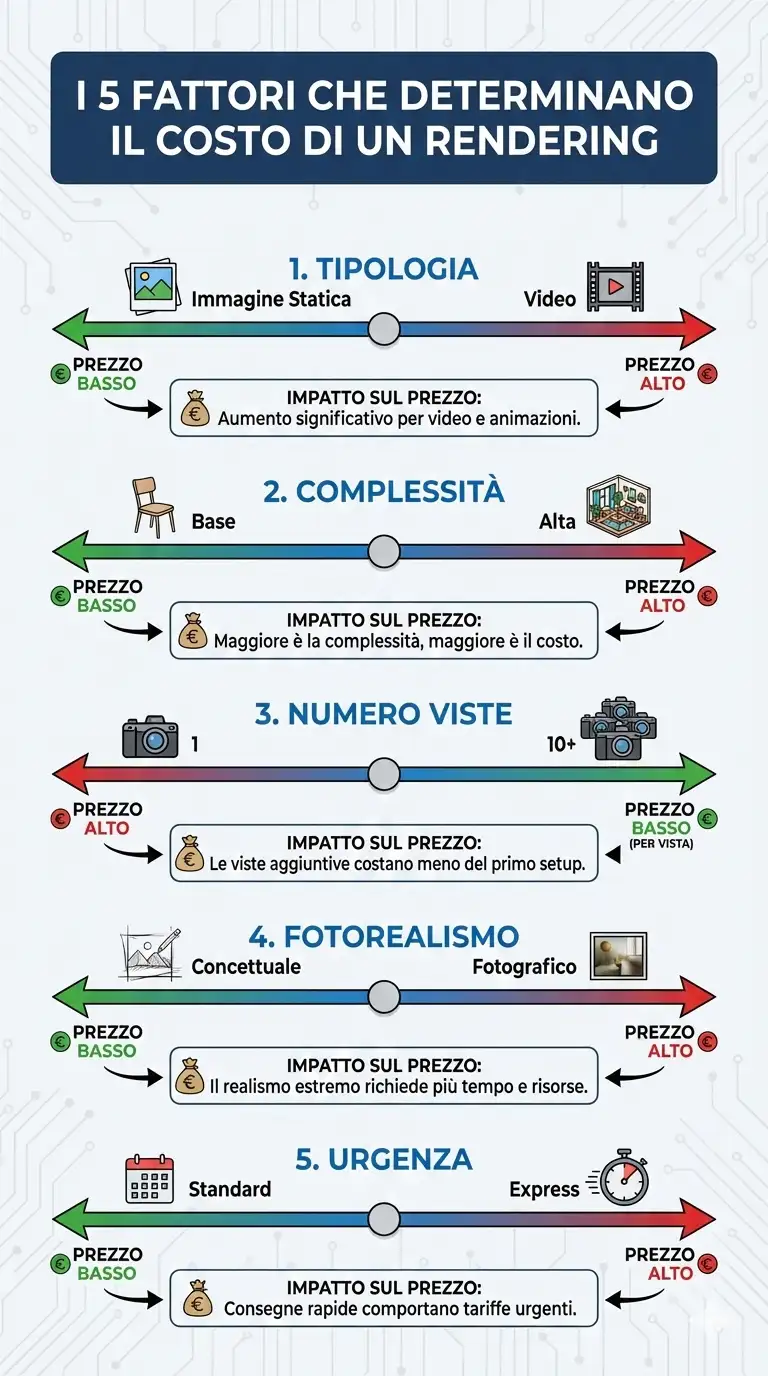
AI tools have subscription costs between €10 and €60 per month. A professional 3D rendering follows a price list per scene, not per shot: an image starts at €300 on an interior and €700 on an exterior, modeling included. For the full prices, see our pricing guide.
How do I figure out which type my project needs?
Ask yourself who you'll show the images to and for what purpose. An internal brainstorming meeting: AI is enough. A commercial brochure or an off-plan sale: you need traditional 3D rendering.
Will AI replace rendering studios?
No, but it will change them. Studios that integrate it into their internal workflow get faster on secondary operations. Those that sell it as a final sales service take a risk on technical quality and commercial fairness.
Does Archivision studio use AI?
Internally, yes, on some workflow operations (denoising, vegetation, upscaling). On the final deliverable to the client, no: every rendering we deliver is composed, lit and finished by people who know architecture. We don't sell AI as a commercial service.
In summary
- AI rendering and 3D rendering answer different needs: the first for exploration and concept, the second for the final deliverable
- AI quality has improved, but it doesn't guarantee the dimensional consistency or material accuracy required for commercial use
- Comparing costs only makes sense for the same use: €30 of AI doesn't replace €500 of 3D rendering when 3D rendering is what you need
- At Archivision we use AI internally on secondary operations, never as a generator of final images delivered to the client
Trying to decide which type of rendering your project needs? Tell us what you're developing: we'll help you understand where AI can help in your case and where you need traditional 3D rendering instead. Calculate your quote or write to us: we reply within 24 business hours with a structured proposal.